PoulTech – Digital Poultry Farm Management Tools

This is an itch that we have been working on for a while, to leverage our over 12 years experience in raising commercial layers for eggs, and 5 years breeding local chicken for customers, into a set of easy of use digital tools for farmers.

The tools added in this first set at https://app.kungu.farm/:

  1. Feed to Egg Profitability Calculator – computation of profits from layers
  2. Vaccination Schedule – schedule for layer vaccinations
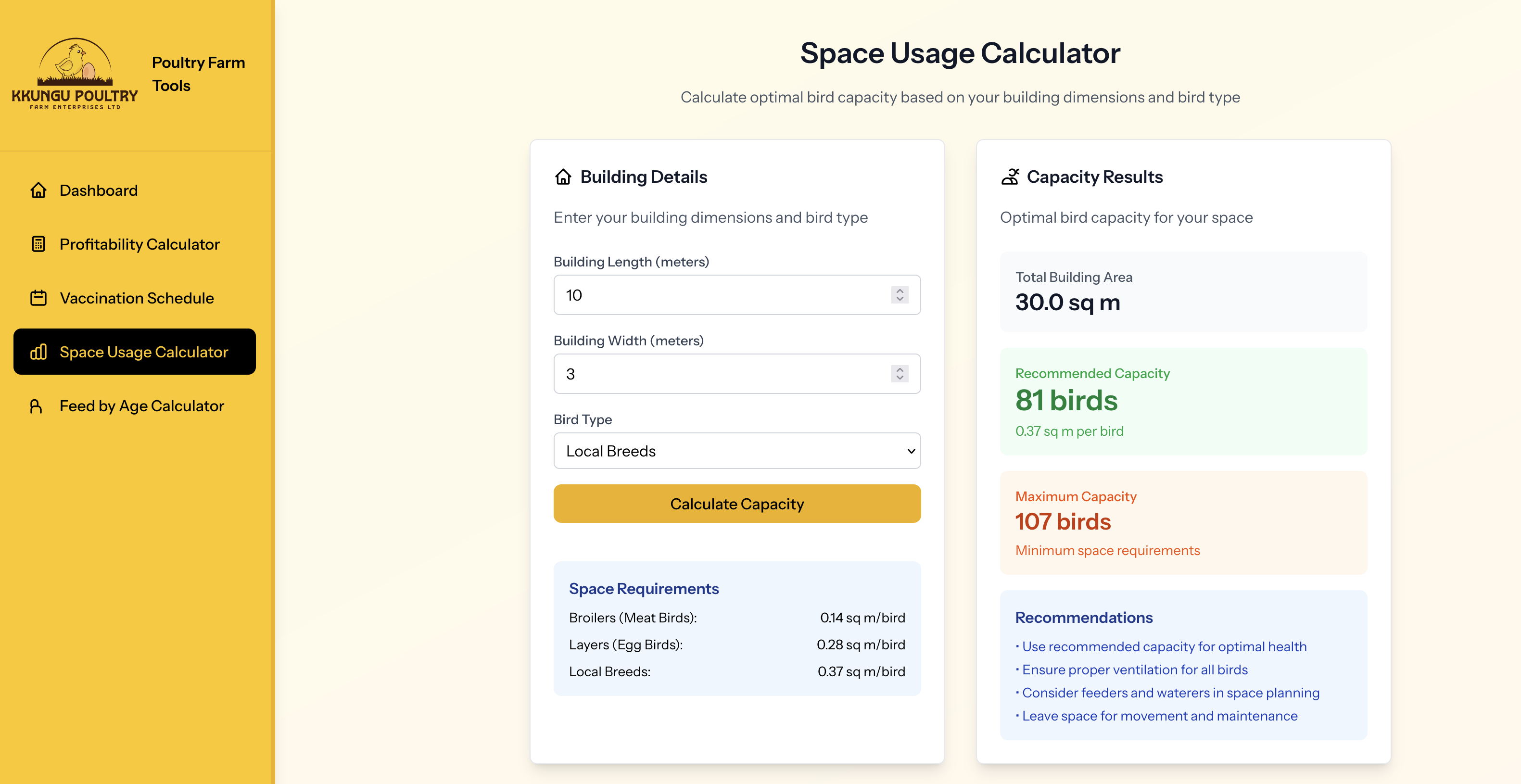
  3. Space Usage Calculator – how many birds can you fit in a space that you have

More features to be added based on your feedback

Disinfection and preparation of a poultry house before receiving new flocks

If a chicken house has been used before and you have time, you could try the following approach we use

1.⁠ ⁠Jik in water – 250ml of Jik in 20l of water, spray the whole house, laying boxes and walls until drenched, then leave to dry. This may need 3 to 5 days depending on the weather
2.⁠ ⁠⁠Kisula (rock salt) – 1kg of salt in 10l of water, especially for the walls, corners, inside, under and behind laying boxes – then leave to dry which may need 2 to 3 days
3.⁠ ⁠⁠Use some of the commercial non-toxic disinfectants on the market

That 3-phase cycle helps us get clean out the houses and slow infection builds

When the birds are in we also disinfect spraying with a non-toxic chemical once every 2 weeks to prevent disease build-up in addition to other litter management techniques

Building a Chicken House – Experience

This is to share our experience building out a new local chicken house as well as the ideas that we considered, as documented on X at https://x.com/kungufarm/status/1352324851948781572?s=20

There was space on a wall, which we considered as the space for the home chickens. The design decisions we made are as follows:
1. It would be 1 iron sheet wide, 9 feet long, giving a width of 8 feet to cater for the slope.
2. The length would be 35 feet, with 3 rooms each 10 feet wide, and a store of 5 feet to store food, and equipment and maybe act as a sickbay.

Once the foundation was completed then we roofed it to ensure that it met the planned size without requiring changes

The walls are low, usually 4 to 5 bricks high, however we increased this especially for handling water sprays from the roof, and being on a slope they are of different heights

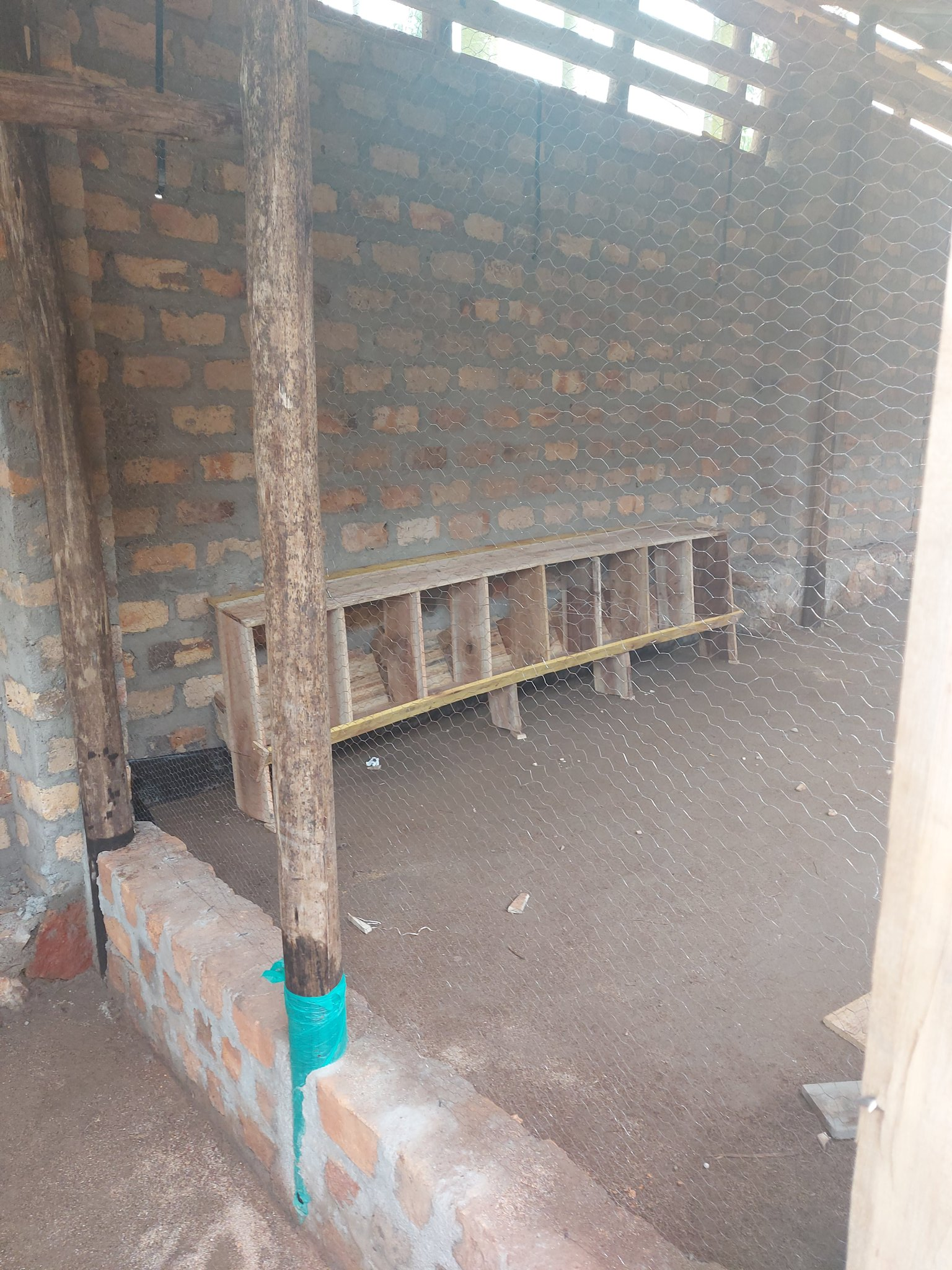
Add the chicken mesh, as you may notice there are 3 rooms each 10 feet wide, with its own door to enable separation of different birds as may be needed. The last room is the store for storage. Laying birds need a lot of aeration for proper growth so chicken mesh is used in the spaced.

When a room is needed as a brooder we cover the windows with plastic to maintain the heat within the room

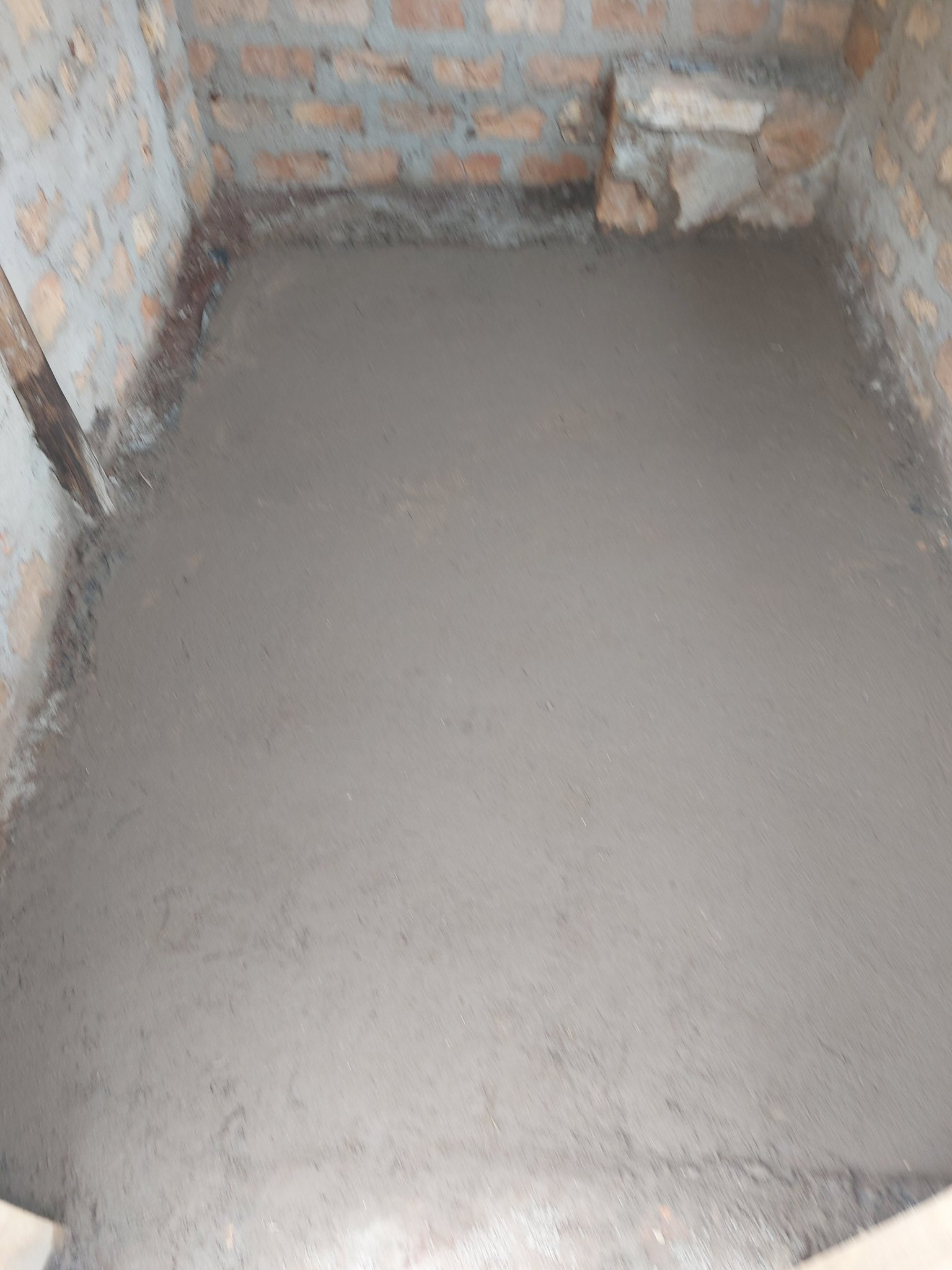
The floors are concrete to ensure the birds do not dig to the soil underneath transmitting diseases

The laying boxes are next where we expect the birds to drop their eggs

2024 – The year Local Chicken comes mainstream

We have been key advocates for local chicken over the years, and in 2022 we made a pivot from commercial layers, into breeding and raising local birds, based on parent stock from a reputable breeder.

Strategy for Maximizing Outputs

The key to maximizing the outputs for local chicken is based on:

  • Improved nutrition – rather than feed the birds on leftovers, plain maize bran leverage concentrate based feeds like commercial hybrids (while managing costs)
  • Proactive care and treatment – vaccination (following the same schedules as commercial hybrids), regular deworming and vitamin boosts
  • Management – clean and airy rooms, dry litter, clean water and feeding utensils, birds per square meter, number of birds per drinker and feeder
  • Dark laying boxes for hens for eggs
  • Debeaking of hens so that they do not eat their eggs, additional trimming of claws for cocks so that they do not tear the backs of the hens for breeding stock

Market Opportunity

This is always a key question to adoption, and there are two paths:

  1. Home Farming – this approach is for anywhere between 10 to 50 birds, a great place for those who are new to the poultry business. The focus of this approach is:
    • Improve household nutrition – when the hens start laying, chicken for meals (cocks are best for this), as a starting point for households
    • Increase household incomes – once the family has sufficient nutrition, the extra eggs can be sold off, the hens/cocks can be sold off not just for meat but for breeding too
    • Provide training for children home – to understand how to raise chicken, responsibilities, maintaining clean living spaces for them, repairs and creativity in solving common problems
  2. Commerical Purposes – the dual purpose birds are competitive with commercial hybrids if you target different aspects
    • Cocks/hens do not grow as heavy as kuroilers but are preferred for traditional ceremonies, gifts, even slaughter during Eid and for discerning customers
    • Hens do not lay as much as commercial hybrids, only up to 75-85% depending on management, however their offlaying prices are almost 100% higher. Adding green to get yellow yolk eggs provides a premium over the numbers that hybrids produce making breaking even much easier for smaller numbers

Overall the market opportunity is with premium pricing for the birds, eggs and their meat, rather than going head to head with the hybrids broilers and layers, like the marketing books say “Change the rules of the game so that you can compete”

Where do I begin?

The most important question, depends on where you are, however our recommendation is to always start small to what you can manage and afford

  1. Home farming – 10 to 30 birds which helps balance the amount of investment and effort to the outputs
  2. Commerical farming – 50 to 100 birds, for a beginner, and more depending on your experience however targeting a specific market is very important to get clarity on the birds you will select to invest in

How can we help you get started?

We breed and sell all ages of birds, you can select the gender from 4 to 6 weeks when anatomical features become more prominet

  1. Day old chicks – the lowest cost starting point, best if you have experience, capacity and resources for brooding
  2. 4 week old birds – these are the sweet spot for many farmers, the birds are just out of the brooder, not needing additional heat in the evenings
  3. 8 week birds – after fowl typhoid vaccination
  4. 16 weeks – adult birds which are usually adversely affected by any environment changes, thus gives sufficient time for recovery before laying commences from 20 weeks

Resources

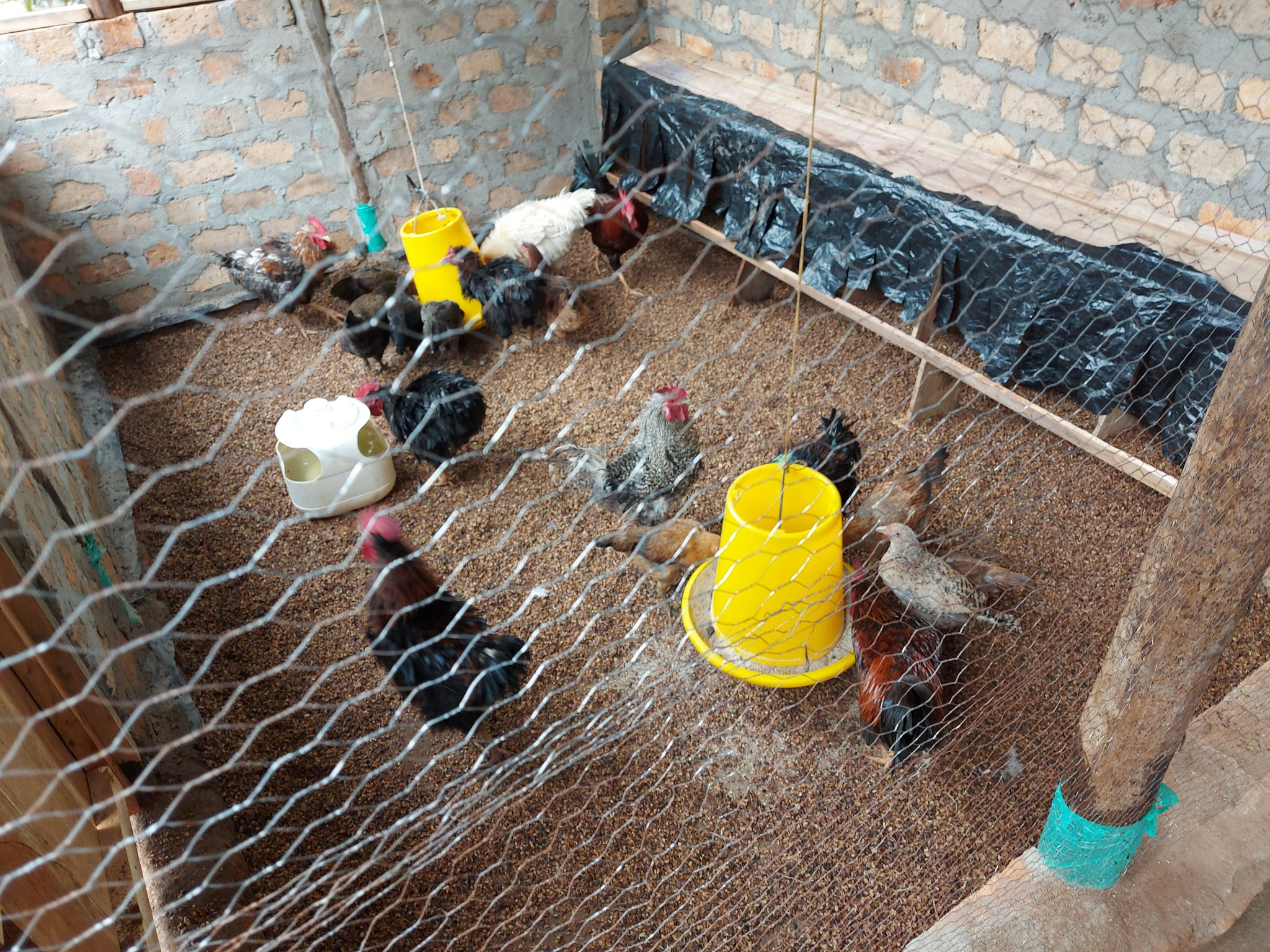
What do they look like?

How do I safely add local chicken from un-trusted sources to my home farm flock

This is a common occurance, where you could be gifted some chicken or buy some along your travels, that you want to integrate with your flock at home.

Our recommendation is not to add the new birds directly to your flock, as they could be disease carriers thus infect your existing birds, and in the worst case you could lose all of them. This has happened to other farmers

The approach we suggest you use is to isolate the birds and put them on a treatment regimen to ensure “most” disease is cleared before adding to your flock

DayActionNotes
1Antibiotic treatment for 5 daysCommmon is Tetracycline 10%, this will clear any infections that the birds have carried
7DewormWorms are easily transmitted within the litter this is the next step
9Newcastle + Infectious Bronchitis VaccinationThe two most common and deadly infections, this is done after the antibiotics and deworming
11Vitamin for 3 daysGiven all the medications this helps
37Deworming30 days from the last deworming, and use a different dewormer to ensure all the different types of worms are removed
39Newcastle + Infectious Bronchitis vaccination
Table 1: Isolation and treatment of foreign birds before integration in an existing flock

What approach have you used for your flocks?

Poultry Laying Box Design

A common challenge with poultry especially layers is the design of the design and use of laying boxes. I will be sharing the design of boxes that we have used and the reasons for the design choices, including enhancements we have made in newer iterations

The design considerations are:

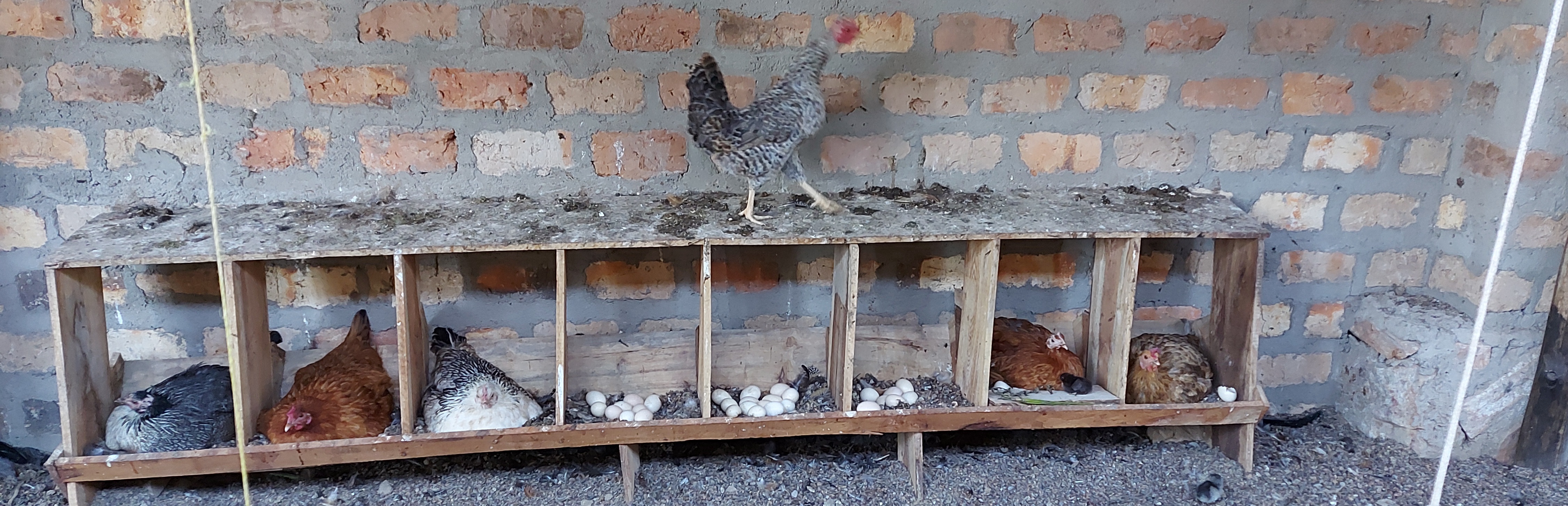
  1. The slanting top about 45 degrees stops the birds from spending time at the top of the laying box, and soiling it (the last image below illustrates this adequately)
  2. The laying box has to be placed close to the wall so that the birds do not climb on the edge
  3. The laying boxes are 1 foot wide to fit a laying bird, or even two especially during peak laying times from 9am to 11am
  4. The laying boxes are also about 1.5′ high so that there is sufficient clearing for the birds and cleaning is a breeze
  5. The floor is slanted at a small angle so that the eggs roll to the wall – it should not be a large angle to break the eggs
  6. Coffee husk shavings can also be added on the floor to keep the eggs from cracking when laid, and to provide comfort in cases where the hens are allowed to incubate the eggs
  7. At the front is a wood barrier to protect birds inside from getting their behinds pecked by those on the ground (this is common as the birds turn to position themselves to lay) and protects the eggs from being eaten
  8. The height of the laying box is about 15cm (0.5′) so that a bird cannot fit below but the birds can get in easily

2020 Plans

As the rest of the world is making New Year resolutions we have solidified our 2020 plans

  1. Grow current flock from 2,200 to 3,200 which is our installed capacity. This will enable us to leverage our 6 year learning journey and start turning it into profit
  2. Start livestock farming – this is part of our long term strategy of vertical integration and multiple revenue stream. The plan is
    • The livestock will be zero grazed and growing the numbers organically
    • Start goats herding from the does that we own but do not have a home. Construction of a goat pen
    • Diary farming – start with a heifer mid year as we figure out the feeding needs and processes
    • Immediately we shall get access to dung and urine which will improve the yields of our banana plantations
  3. One of our plantations seems to have a persistent infestation of Digitaria scalarum Chiov. (gramineae) commonly known as lumbugu, and despite all the hard work the soil quality too does not seem to be improving. So we are going to cut this down around the March rains, and plant sweet potatoes, followed by a maize & beans combo to provide alternate soil usage. This will provide a needed 18 month fallow period to better yields post 2021. The plan is to use the biomaterials – stems & leaves  mulch for the one which will be retained to give the necessary soil protection.

Looking forward to a busy 2020

An Alternate Business Model for Small Holder Farmers – Free Range Indeginous Chicken

The commercial poultry business is now the rage with the increased demand for eggs and broilers, however it is fraught with peril due to the flock management needs, unstable prices of feed ingredients, weather (oh yes ask any farmer what the effects of the heat wave have been), feed formulation knowledge and not forgetting disease management due to the high numbers maintained in closed spaces. This business model requires specialized breeds whose genes have been formulated to grow fast (meat), have high productivity (layers) if managed well. This raises the capital and operational costs, which many cannot afford.

Based on our experience with commerical poulty, we would like to share an alternate business model, and our current progress with it, as a way of stimulating home-based agribusinesses. These are local birds, indeginous yes, which many have shunned over the years for kuroiler breeds (unfortunately we are not a big fan) so went back to our roots.

What are the major challenges with indeginous breeds that have been put forward:

  1. Diseases wipe them out
  2. Low productivity (eggs) and low weights (meat)
  3. Long growth times to achieve milestones
  4. Predators – rats, dogs and “humans”

In our experience, the business model and thinking is that the business model is what is wrong, leading to mismatched expectations. The commercial approach fot indeginous birds is not selling bulk in low value, but low numberrs of high quality and value.

What is our approach:

  1. The value of the local flock cannot be realized quickly, and has to be built over time so that it it self sustaining
  2. Leverage the learnings from the commerical poultry to fix some of the issues such as:
    • Disease management – follow the vaccination schedules for the commercial breeds to build immunity and reduce infection
    • Low productivity – supplement the diet with 30-50% commercial feeds to fix any deficiencies
    • Local additivies – leverage local plants such as aloevera, pupmkins, yams,  tree leaves (will provide names later), millet, sorghum, popcorn to supplement the diets
  3. Infrastructure:
    • Housing – ensure adequate space for the birds to spend the night away from predators such as dogs, and rats (yes we lost 10 1-month chicks)
    • Keep the place clean – oh yes this requires investment, but reduces on disease outbreaks
    • Feeders and drinkers – for local birds, are you kidding me, they can scavenge! Oh yes, look after them well and they will multiply
    • Free range area – demarkate an area for the birds to move around looking for food and scratch around, otherwise they collect diseases as they roam and also are prey for predators. We have not gotten to this stage yet but are getting there as the numbers grow
  4. How do we intend make money through the sale of:
    • Breeding stock – pullets and cocks since their lineage can be traced
    • Cocks for traditional ceremonies like kwanjulas, gifts to parents
    • Yellow yolk organic eggs at a premium
    • Pullets and cocks for food – very tasty for special occasions
  5. What do the numbers look like? This is a summary of the numbers in a way that makes sense on growth. All the chicks were brooded by their mothers
Month Additions Losses Notes
October 2018 3 Initial stock – 1 Cock and 2 pullets
November 2018 6 pullets,

18 chicks

1 pullet,

9 chicks

Purchase of pullets.

Theft of a mother and her 9 babies,

December 2018 10 chicks 8 chicks Predator birds and wild animals
January 2019 15 chicks, 6 pullets 3 chicks A purchase of pullets from upcountry travels
February 2019 10 chicks 3 chicks Predator birds and wild animals
March 2019 4 chicks 8 chicks Rats killed the chicks so moved the mother to the main house
April 2019 4 chicks 8 pullets Had lots of dogs around the house during mating season so ate the birds in the mornings

As of today, 28 April 2019, we have 2 hens brooding 18 eggs, and a laying hen with about 10 eggs – they tend to start brooding at about 10 – 12 eggs, that seems to be the natural cycle.
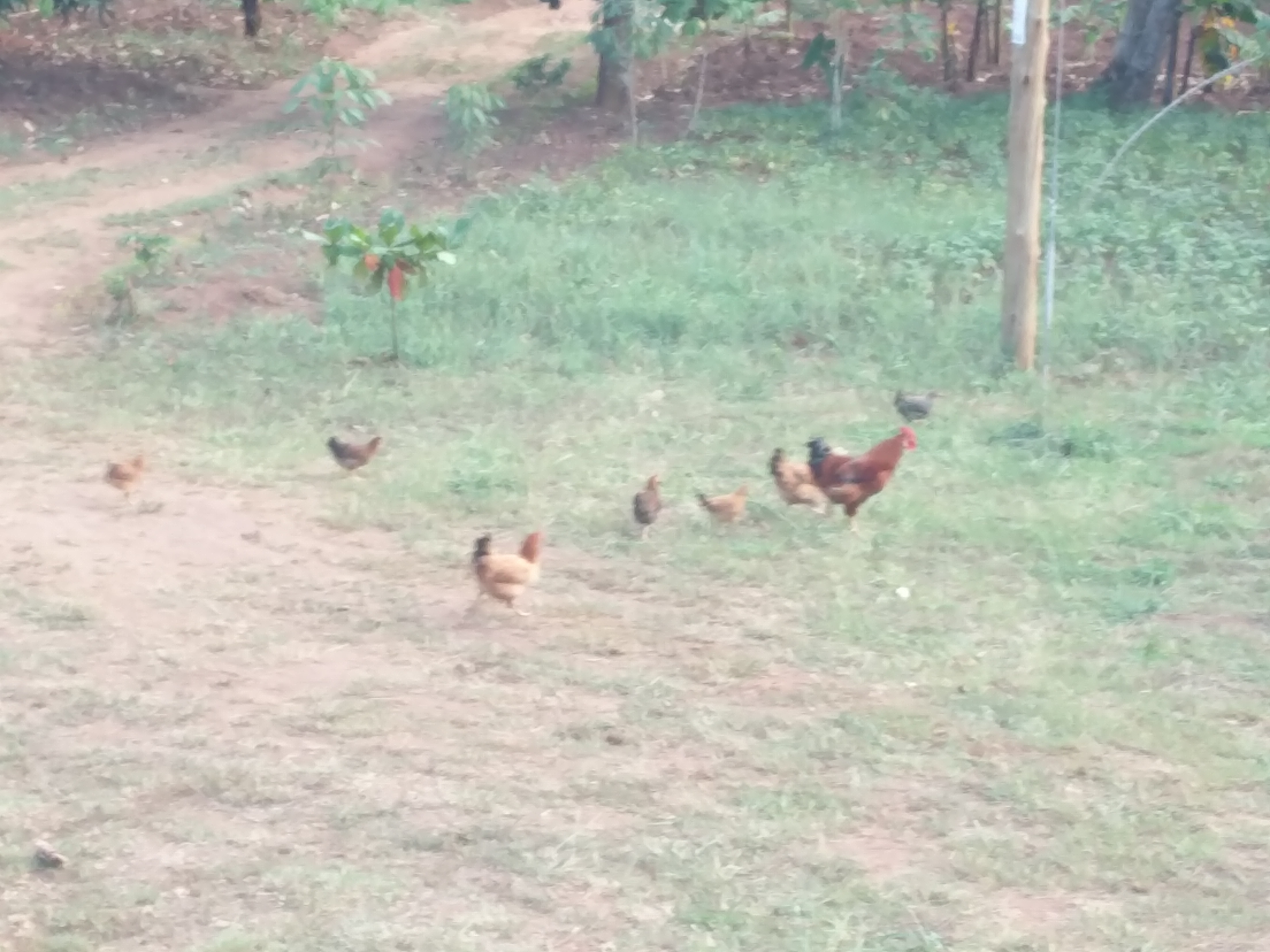
2019-04-06 18.24.04

Happily walking around with the main cock
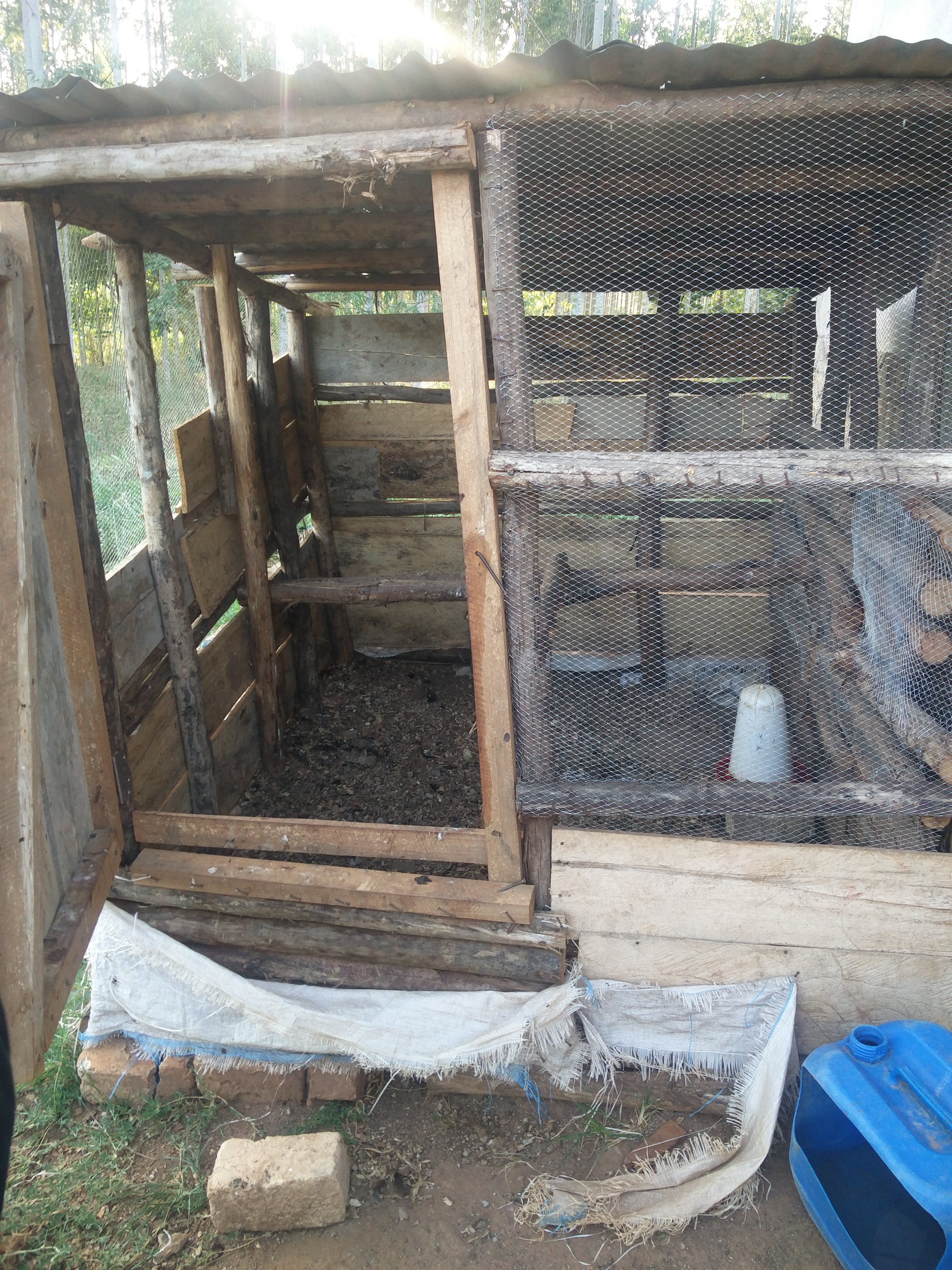
2019-04-06 17.59.51

Chicken house from locally made materials and frugal designs
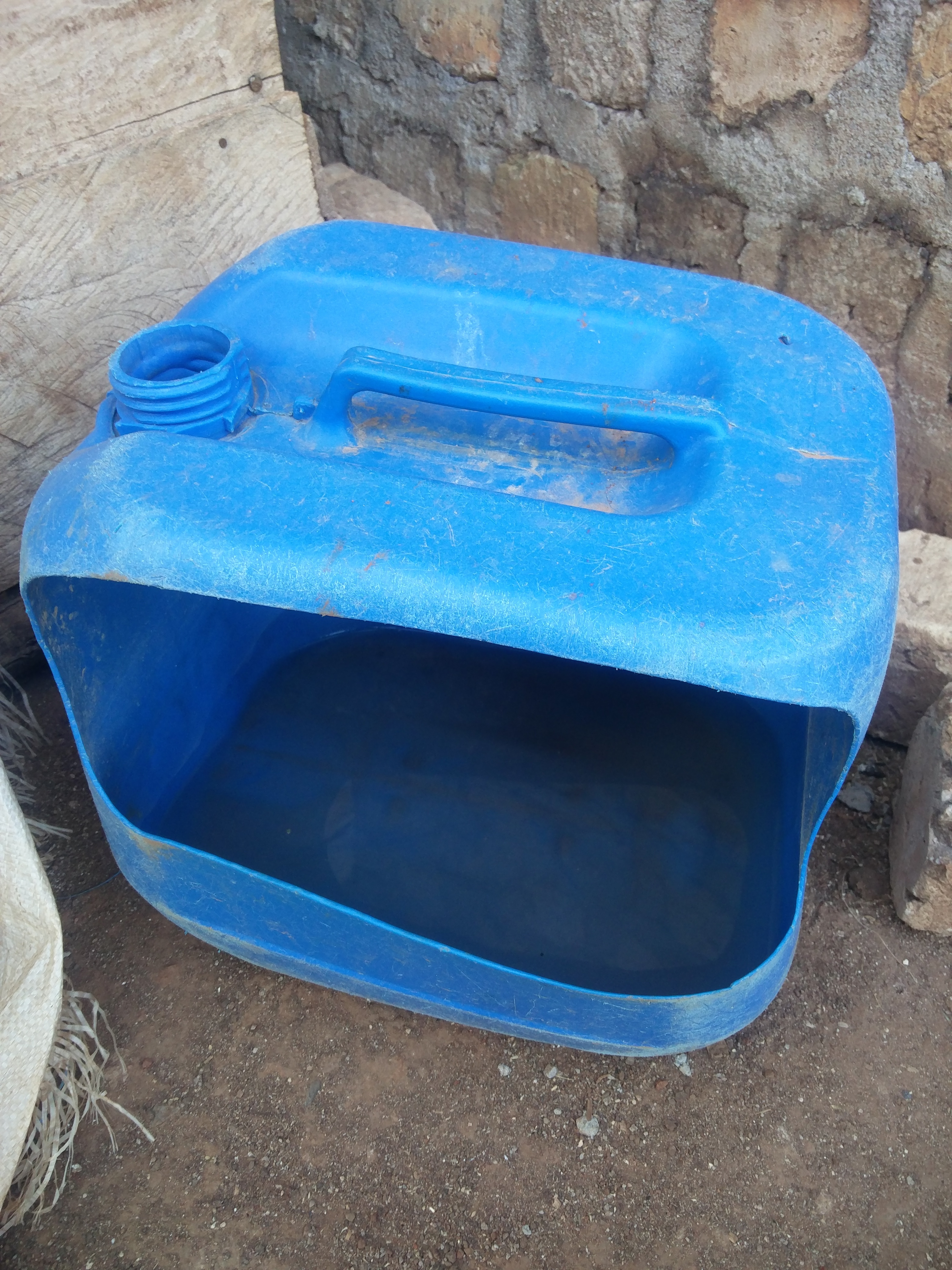
2019-04-06 17.59.11

Drinker from jerrycan leveraged from commercial deep litter operations
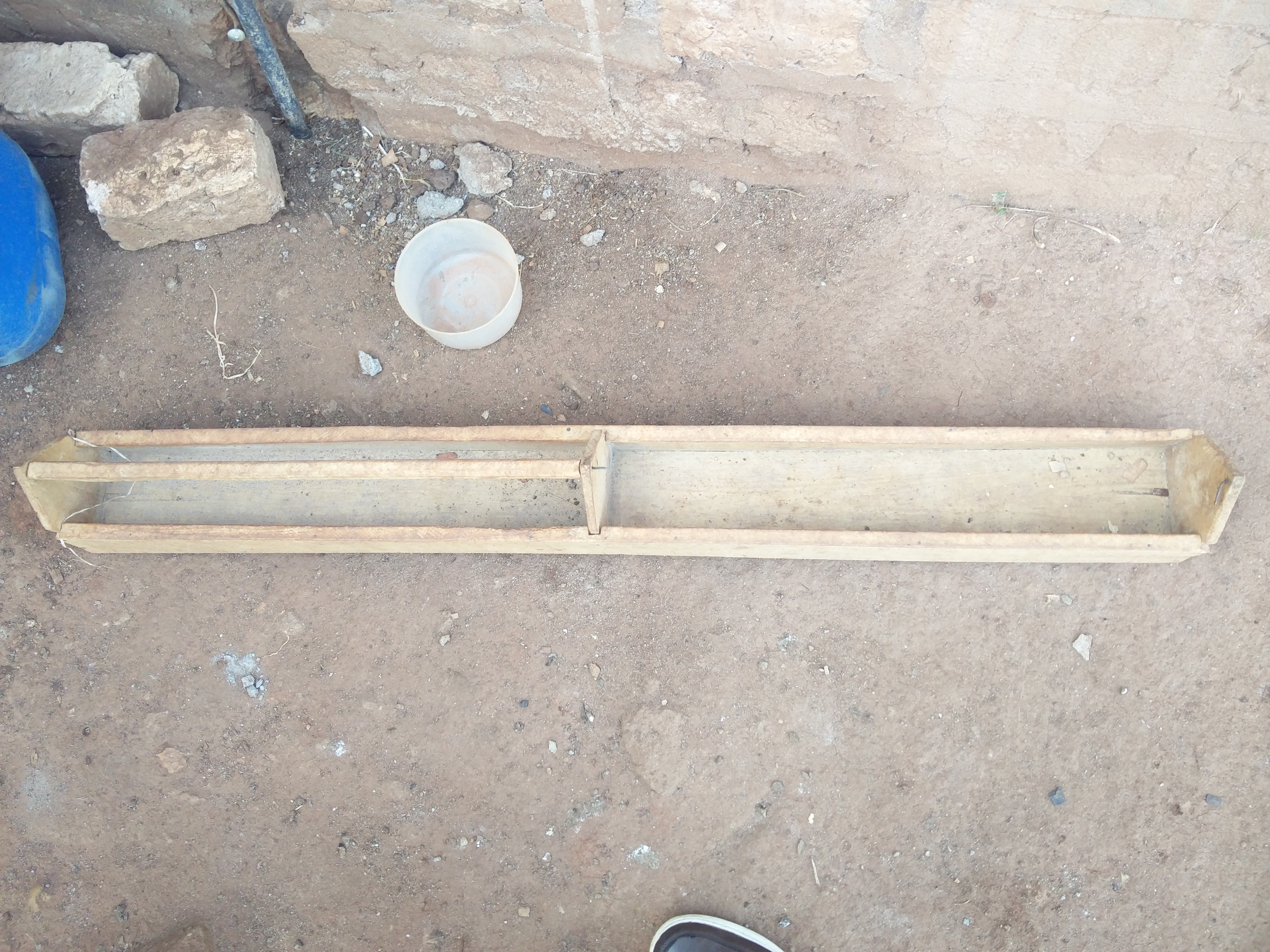
2019-04-06 17.59.17

Locally made feeder usually used in deep litter

This Twitter thread covers similar ground for the construction of the house and how the flock is proceeding https://twitter.com/kungufarm/status/1080144748252418048?s=20

Brooder Week 5 – Learnings and Look Ahead

The chicks are now 5 weeks in the brooder, with a mortality rate of 0.4%, weights less than the management guide (which are based on environmentally controlled conditions) but within range and closing fast, weight uniformity distribution of over 70% and improving.

This post is about lessons learnt in this flock and what we have done differently:

  1. Hired brooding services from a poultry focused service provider who provided a worker for the brooder and a vet who visited regularly: 3x per week in the first two weeks, 2x a week later, currently at 1x per week
  2. The vet provided also supervised and carried out vaccinations as per the recommended schedule
  3. Focused on building immunity in the first 3 weeks, now growth and development of the pullets
  4. Weighed the birds to provide benchmarks for the growth, but only used the data for tracking so did not adjust diets to bring up the weights
  5. Adjusted the chick and duck mash formula, to provide the necessary energy levels and texture for easy feeding.
  6. Provided recommended levels of feeders and drinkers to reduce bullying and contention for deed
  7. Bio-security improvement: started leveraging powdered construction lime for initial disinfection and at entrance to the brooder, disinfectant spraying every week on the premises and proactively spraying inside the brooder with a high mist disinfectant (selected not to have any major side effects for the birds)
  8. Collecting data on feed and water consumption on a day-to-day to better understand the changing patterns – increase in feed consumption is at 4g per bird per week

As always a selection of shots from brooder:

image

image

image

image

Q & A: How can I manage Biosecurity on a Poultry Farm

Question: I hear practitioners talking about bio-security being a requirement on a poultry farm, why do I need it, how do I do it?

Answer: Biosecurity is a practice designed to prevent the spread of disease onto your farm. It is accomplished by maintaining the facility in such a way that there is minimal traffic of biological organisms (viruses, bacteria, rodents, etc.) across its borders. Biosecurity is the cheapest, most effective means of disease control available. No disease prevention program will work without it.

Best Practices:

Contributions by: Mugisha James Frank of Jade Commodities Ltd, Ssekatawa Charles – Veterinary Consultant with Surebreed Farming Operations, Peter Ssenkungu of NutriNova Limited, Dr. Sewagudde Samuel – Genesis East Africa Ltd and Nakato Winnie Fernandes of Vic and Val Ltd.

Our understanding of biosecurity is mitigation of risk in case of disease occurrence or outbreak….Measures taken so far are;

  1. Controlled access into the farm through fencing. Farm divided into two zones, buffer zone fenced off with barbed wire and clean zone with chain link. General movement is from buffer to clean zone. Poultry coops are within the “clean area”
  2. Restricted access to the farm by visitors. Any visitors who come in have their shoes sprayed with a disinfectants or common bleach.
  3. Professionals in the poultry industry are considered as the highest risk and require special permission to access the farm because they have accessed other farms so are more prone to carry bio-hazards.
  4. Manned access points were we do spray both individuals n vehicles using disinfectants like biosafe or common bleach like JIK
  5. Records kept on a daily basis on the accessibility of the farm.
  6. All staff have protective gear in terms of uniforms, dust masks n boots.
  7. Water filters fitted to each tank in the water distribution network to reduce the incidence of Ecoli
  8. Isolation of coops for flocks from each other
    • Poultry coops spaced from each reduce air-borne contamination. The minimum distance is 20m, with 50m being the international recommendation. The open nature of the poultry coops requires breaking the effect of direct flow of air from one house to another. Beyond 15m, the air flowing from one coop gets diluted with fresher air outside the coop reducing the contamination of air entering the next coop.
    • Each poultry unit is strictly manned by one person.
    • All poultry units have footbaths whose disinfectant is changed on a daily basis.
    • Feeders n drinkers washed on a daily basis, with those of a coop washed separately from others.
    • No sharing of equipment between poultry coops.
    • Each poultry coop has a separate sick bay and isolation ward.
    • Feeds for each coop stored separately so that there is reduced contact during feed distribution
  9. All mortalities recorded and inspected before disposal.
  10. Periodical water and feed tests say every 3 months to monitor their quality.
  11. Housing is provided 4 all poultry attendants, so there is reduced contact with the outside world.
  12. Posters placed all round the farm, reminding staff of the importance of maintaining set biosecurity standards.
  13. After offlaying a flock from a coop, thorough cleaning, of the poultry house is done along with the equipment that has been in use in the coop. This is done multiple times, and a time period of at least 3 weeks to increase the effectiveness of the process.
  14. Vermin control by keeping grass within the farm short and clearing bushes.
  15. Placement of rubbish bins for easy disposal of garbage n vaccine / viral bottles
  16. Periodic burning of garbage

Additional comments and inputs are welcome…