PoulTech – Digital Poultry Farm Management Tools

This is an itch that we have been working on for a while, to leverage our over 12 years experience in raising commercial layers for eggs, and 5 years breeding local chicken for customers, into a set of easy of use digital tools for farmers.

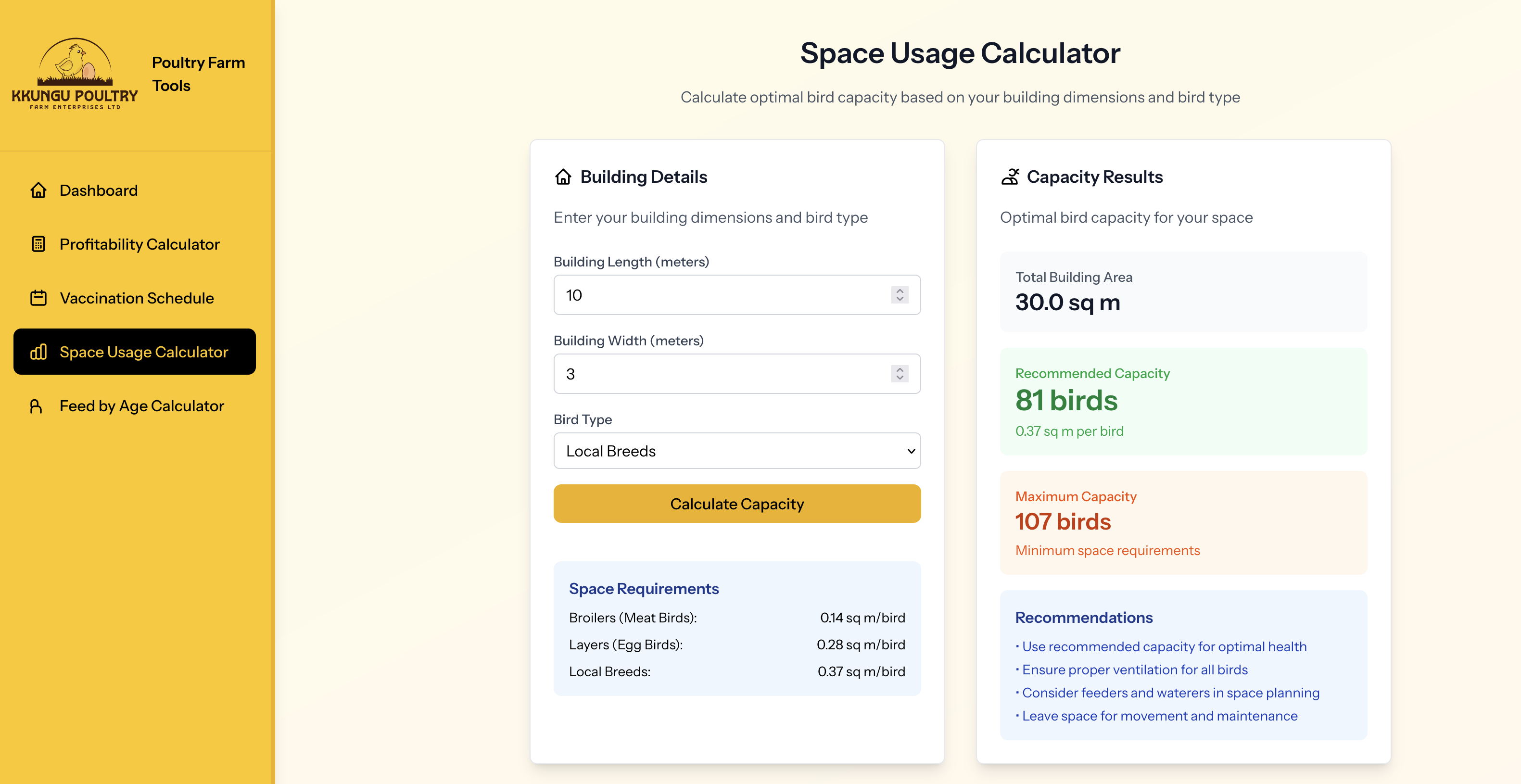
The tools added in this first set at https://app.kungu.farm/:

  1. Feed to Egg Profitability Calculator – computation of profits from layers
  2. Vaccination Schedule – schedule for layer vaccinations
  3. Space Usage Calculator – how many birds can you fit in a space that you have

More features to be added based on your feedback

Local Poultry Management Guide

As part of our path to improve local knowledge for raising and managing indeginous local birds, we have started working on a guide based on our experiences that can be used as a starting point for new and existing farmers

This guide will be evolved with feedback and inputs from farmers so please do share all the experiences that you have to help make it more solid

Send feedback to kungufarm@gmail.com

https://guide.kungu.farm/

Poultry Farm Records Keeping – Part II

This is a follow on from https://kungu.farm/2014/06/08/farm-record-management/ which goes into more detail into the details of records management that we have developed over the years

The image below illustrates a sample page for tracking daily information for one of our flocks

Daily Record Sheet for Poultry Farm Flock

The key pieces of data collected

  1. Feeding plan – when and how much drinking water & feed are provided
  2. Any mortalities during the day and root cause analysis
  3. What medication has been provied in the water or feed
  4. Egg production – these are picked from the hatching boxes every hour to reduce damage, egg eating and brooding (when the hens sit on the eggs), with a production percentage computed and tracked

A summary of this information is sent via SMS message to the Operations manager daily e.g.,

House A 17kgs, water 3jerricans, alive hens 229,B in good condition water 2jerricans, feed 10kgs, alive chicks 193

How do you keep records on your farm?

An Alternate Business Model for Small Holder Farmers – Free Range Indeginous Chicken

The commercial poultry business is now the rage with the increased demand for eggs and broilers, however it is fraught with peril due to the flock management needs, unstable prices of feed ingredients, weather (oh yes ask any farmer what the effects of the heat wave have been), feed formulation knowledge and not forgetting disease management due to the high numbers maintained in closed spaces. This business model requires specialized breeds whose genes have been formulated to grow fast (meat), have high productivity (layers) if managed well. This raises the capital and operational costs, which many cannot afford.

Based on our experience with commerical poulty, we would like to share an alternate business model, and our current progress with it, as a way of stimulating home-based agribusinesses. These are local birds, indeginous yes, which many have shunned over the years for kuroiler breeds (unfortunately we are not a big fan) so went back to our roots.

What are the major challenges with indeginous breeds that have been put forward:

  1. Diseases wipe them out
  2. Low productivity (eggs) and low weights (meat)
  3. Long growth times to achieve milestones
  4. Predators – rats, dogs and “humans”

In our experience, the business model and thinking is that the business model is what is wrong, leading to mismatched expectations. The commercial approach fot indeginous birds is not selling bulk in low value, but low numberrs of high quality and value.

What is our approach:

  1. The value of the local flock cannot be realized quickly, and has to be built over time so that it it self sustaining
  2. Leverage the learnings from the commerical poultry to fix some of the issues such as:
    • Disease management – follow the vaccination schedules for the commercial breeds to build immunity and reduce infection
    • Low productivity – supplement the diet with 30-50% commercial feeds to fix any deficiencies
    • Local additivies – leverage local plants such as aloevera, pupmkins, yams,  tree leaves (will provide names later), millet, sorghum, popcorn to supplement the diets
  3. Infrastructure:
    • Housing – ensure adequate space for the birds to spend the night away from predators such as dogs, and rats (yes we lost 10 1-month chicks)
    • Keep the place clean – oh yes this requires investment, but reduces on disease outbreaks
    • Feeders and drinkers – for local birds, are you kidding me, they can scavenge! Oh yes, look after them well and they will multiply
    • Free range area – demarkate an area for the birds to move around looking for food and scratch around, otherwise they collect diseases as they roam and also are prey for predators. We have not gotten to this stage yet but are getting there as the numbers grow
  4. How do we intend make money through the sale of:
    • Breeding stock – pullets and cocks since their lineage can be traced
    • Cocks for traditional ceremonies like kwanjulas, gifts to parents
    • Yellow yolk organic eggs at a premium
    • Pullets and cocks for food – very tasty for special occasions
  5. What do the numbers look like? This is a summary of the numbers in a way that makes sense on growth. All the chicks were brooded by their mothers
Month Additions Losses Notes
October 2018 3 Initial stock – 1 Cock and 2 pullets
November 2018 6 pullets,

18 chicks

1 pullet,

9 chicks

Purchase of pullets.

Theft of a mother and her 9 babies,

December 2018 10 chicks 8 chicks Predator birds and wild animals
January 2019 15 chicks, 6 pullets 3 chicks A purchase of pullets from upcountry travels
February 2019 10 chicks 3 chicks Predator birds and wild animals
March 2019 4 chicks 8 chicks Rats killed the chicks so moved the mother to the main house
April 2019 4 chicks 8 pullets Had lots of dogs around the house during mating season so ate the birds in the mornings

As of today, 28 April 2019, we have 2 hens brooding 18 eggs, and a laying hen with about 10 eggs – they tend to start brooding at about 10 – 12 eggs, that seems to be the natural cycle.
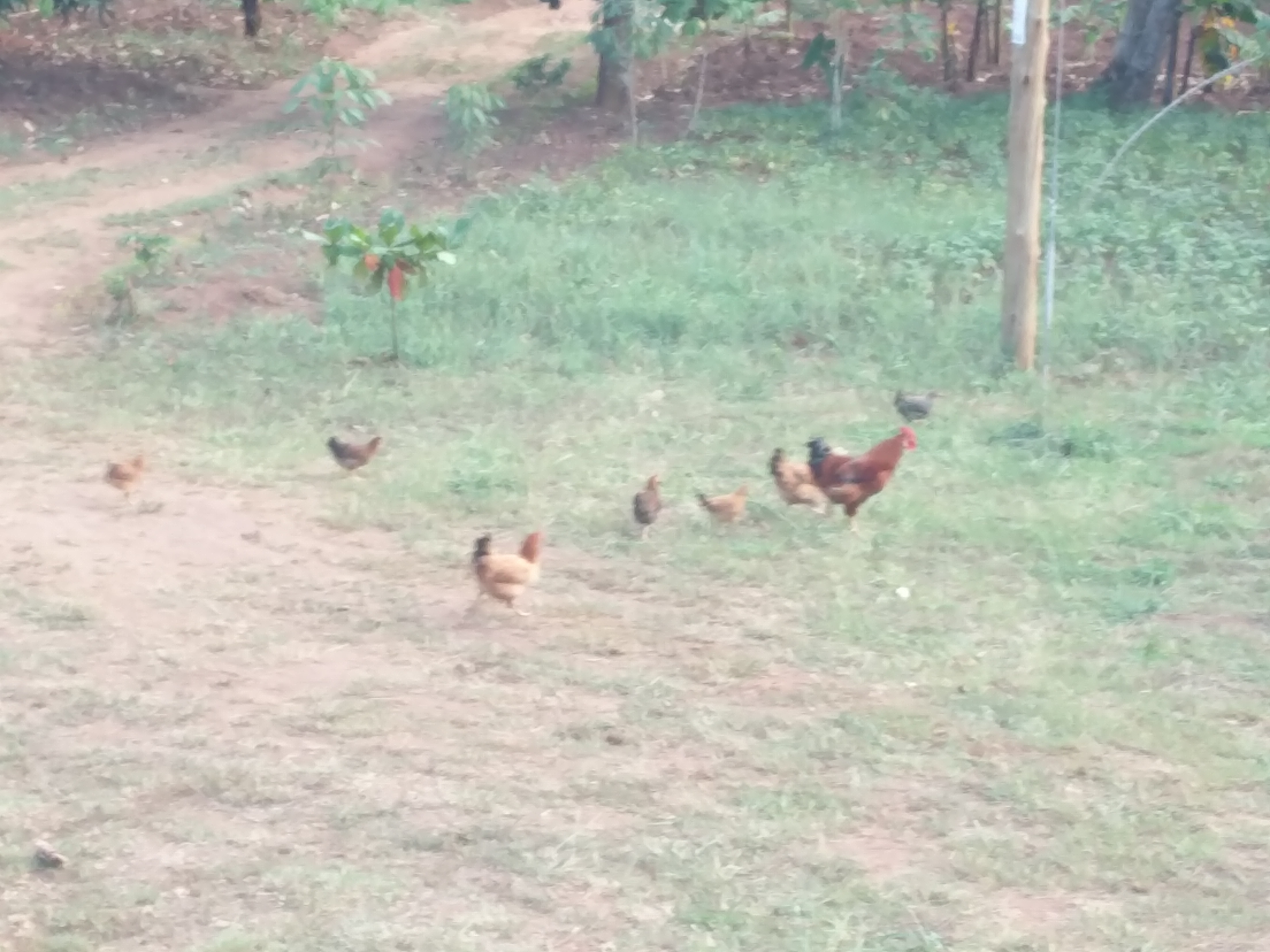
2019-04-06 18.24.04

Happily walking around with the main cock
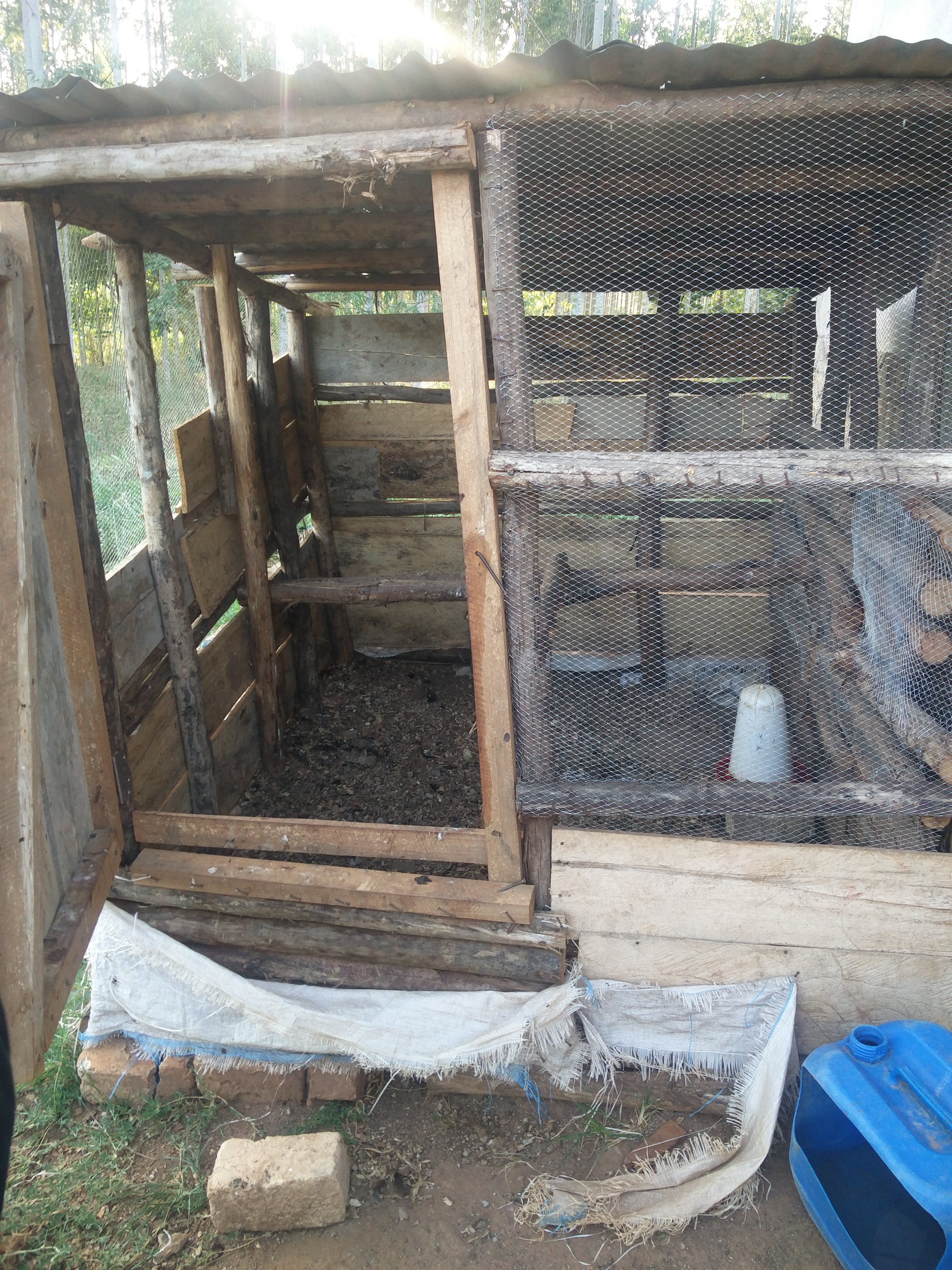
2019-04-06 17.59.51

Chicken house from locally made materials and frugal designs
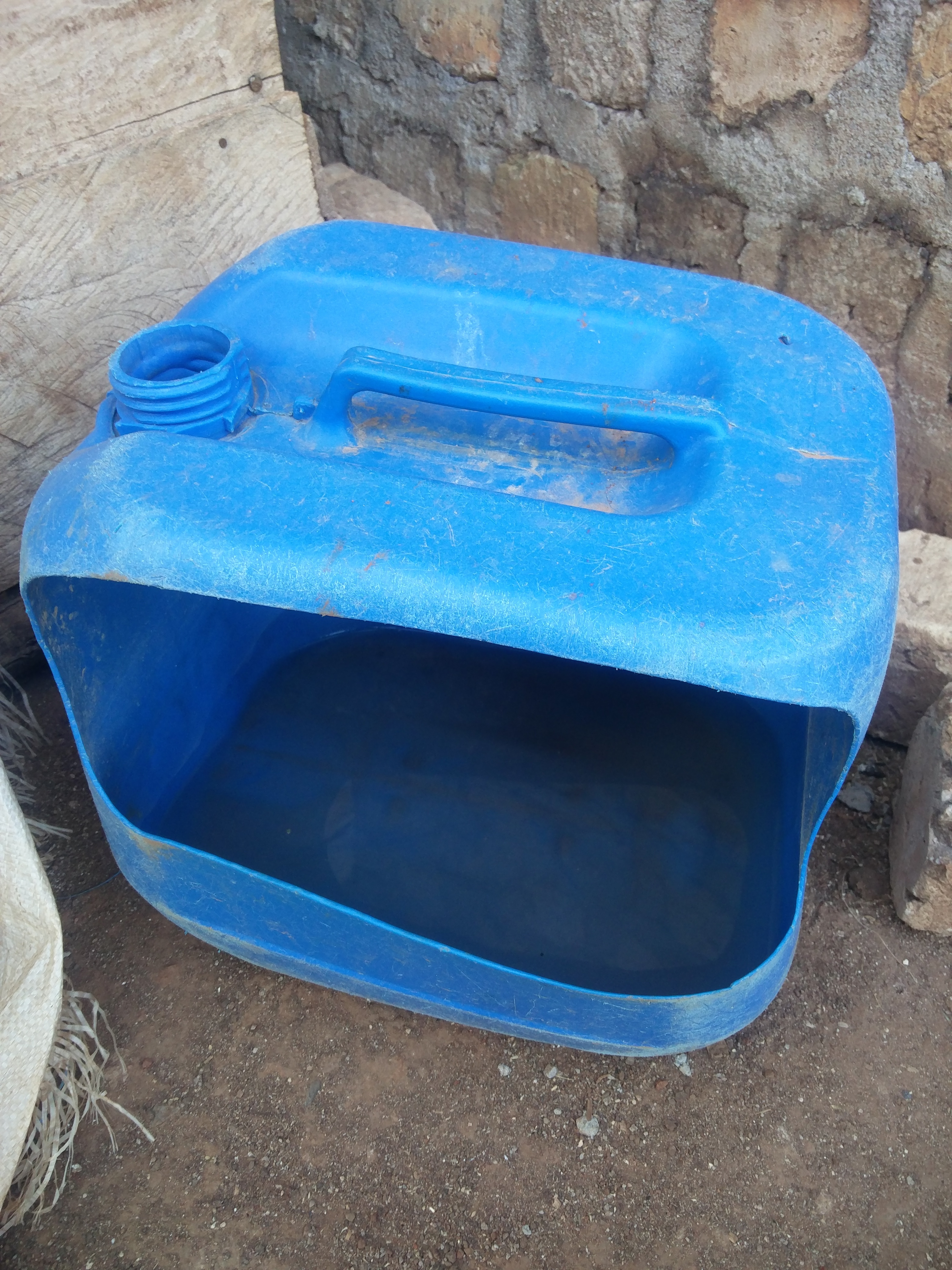
2019-04-06 17.59.11

Drinker from jerrycan leveraged from commercial deep litter operations
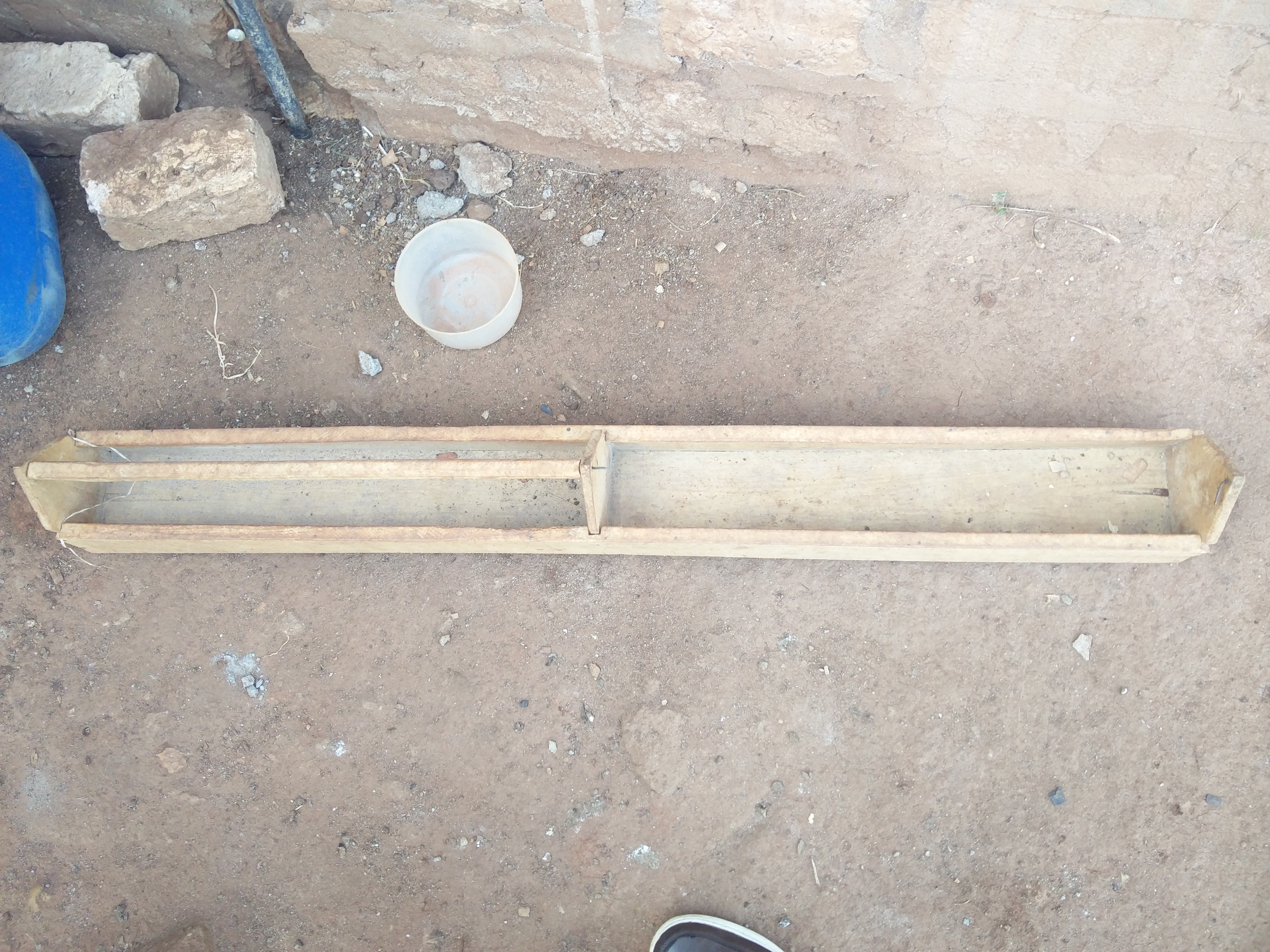
2019-04-06 17.59.17

Locally made feeder usually used in deep litter

This Twitter thread covers similar ground for the construction of the house and how the flock is proceeding https://twitter.com/kungufarm/status/1080144748252418048?s=20

Brooder Week 5 – Learnings and Look Ahead

The chicks are now 5 weeks in the brooder, with a mortality rate of 0.4%, weights less than the management guide (which are based on environmentally controlled conditions) but within range and closing fast, weight uniformity distribution of over 70% and improving.

This post is about lessons learnt in this flock and what we have done differently:

  1. Hired brooding services from a poultry focused service provider who provided a worker for the brooder and a vet who visited regularly: 3x per week in the first two weeks, 2x a week later, currently at 1x per week
  2. The vet provided also supervised and carried out vaccinations as per the recommended schedule
  3. Focused on building immunity in the first 3 weeks, now growth and development of the pullets
  4. Weighed the birds to provide benchmarks for the growth, but only used the data for tracking so did not adjust diets to bring up the weights
  5. Adjusted the chick and duck mash formula, to provide the necessary energy levels and texture for easy feeding.
  6. Provided recommended levels of feeders and drinkers to reduce bullying and contention for deed
  7. Bio-security improvement: started leveraging powdered construction lime for initial disinfection and at entrance to the brooder, disinfectant spraying every week on the premises and proactively spraying inside the brooder with a high mist disinfectant (selected not to have any major side effects for the birds)
  8. Collecting data on feed and water consumption on a day-to-day to better understand the changing patterns – increase in feed consumption is at 4g per bird per week

As always a selection of shots from brooder:

image

image

image

image

Q & A: How can I manage Biosecurity on a Poultry Farm

Question: I hear practitioners talking about bio-security being a requirement on a poultry farm, why do I need it, how do I do it?

Answer: Biosecurity is a practice designed to prevent the spread of disease onto your farm. It is accomplished by maintaining the facility in such a way that there is minimal traffic of biological organisms (viruses, bacteria, rodents, etc.) across its borders. Biosecurity is the cheapest, most effective means of disease control available. No disease prevention program will work without it.

Best Practices:

Contributions by: Mugisha James Frank of Jade Commodities Ltd, Ssekatawa Charles – Veterinary Consultant with Surebreed Farming Operations, Peter Ssenkungu of NutriNova Limited, Dr. Sewagudde Samuel – Genesis East Africa Ltd and Nakato Winnie Fernandes of Vic and Val Ltd.

Our understanding of biosecurity is mitigation of risk in case of disease occurrence or outbreak….Measures taken so far are;

  1. Controlled access into the farm through fencing. Farm divided into two zones, buffer zone fenced off with barbed wire and clean zone with chain link. General movement is from buffer to clean zone. Poultry coops are within the “clean area”
  2. Restricted access to the farm by visitors. Any visitors who come in have their shoes sprayed with a disinfectants or common bleach.
  3. Professionals in the poultry industry are considered as the highest risk and require special permission to access the farm because they have accessed other farms so are more prone to carry bio-hazards.
  4. Manned access points were we do spray both individuals n vehicles using disinfectants like biosafe or common bleach like JIK
  5. Records kept on a daily basis on the accessibility of the farm.
  6. All staff have protective gear in terms of uniforms, dust masks n boots.
  7. Water filters fitted to each tank in the water distribution network to reduce the incidence of Ecoli
  8. Isolation of coops for flocks from each other
    • Poultry coops spaced from each reduce air-borne contamination. The minimum distance is 20m, with 50m being the international recommendation. The open nature of the poultry coops requires breaking the effect of direct flow of air from one house to another. Beyond 15m, the air flowing from one coop gets diluted with fresher air outside the coop reducing the contamination of air entering the next coop.
    • Each poultry unit is strictly manned by one person.
    • All poultry units have footbaths whose disinfectant is changed on a daily basis.
    • Feeders n drinkers washed on a daily basis, with those of a coop washed separately from others.
    • No sharing of equipment between poultry coops.
    • Each poultry coop has a separate sick bay and isolation ward.
    • Feeds for each coop stored separately so that there is reduced contact during feed distribution
  9. All mortalities recorded and inspected before disposal.
  10. Periodical water and feed tests say every 3 months to monitor their quality.
  11. Housing is provided 4 all poultry attendants, so there is reduced contact with the outside world.
  12. Posters placed all round the farm, reminding staff of the importance of maintaining set biosecurity standards.
  13. After offlaying a flock from a coop, thorough cleaning, of the poultry house is done along with the equipment that has been in use in the coop. This is done multiple times, and a time period of at least 3 weeks to increase the effectiveness of the process.
  14. Vermin control by keeping grass within the farm short and clearing bushes.
  15. Placement of rubbish bins for easy disposal of garbage n vaccine / viral bottles
  16. Periodic burning of garbage

Additional comments and inputs are welcome…

Farm Record Management

Currently the model I am using is as follows (all pen and paper)

1. Expenses Book – here I track all expense on the farm whether operational or capital expenditure.

2. Sales book – sales of eggs to clients which is balanced every Sunday to track Profit and Loss todate

3. Farm journal – for each flock track the water usage, feed given, medication given and any other occurences on the farm. Also for laying birds how many eggs are picked at each point in time. This enables the tracking of laying trends

4. Daily Production Log: total of eggs laid for each flock for each day

The plan is to move this records into Quick books to build a proper P&L but for now this works for us

What do you use, and what works for you?