Disinfection and preparation of a poultry house before receiving new flocks

If a chicken house has been used before and you have time, you could try the following approach we use

1.⁠ ⁠Jik in water – 250ml of Jik in 20l of water, spray the whole house, laying boxes and walls until drenched, then leave to dry. This may need 3 to 5 days depending on the weather
2.⁠ ⁠⁠Kisula (rock salt) – 1kg of salt in 10l of water, especially for the walls, corners, inside, under and behind laying boxes – then leave to dry which may need 2 to 3 days
3.⁠ ⁠⁠Use some of the commercial non-toxic disinfectants on the market

That 3-phase cycle helps us get clean out the houses and slow infection builds

When the birds are in we also disinfect spraying with a non-toxic chemical once every 2 weeks to prevent disease build-up in addition to other litter management techniques

Poultry Laying Box Design

A common challenge with poultry especially layers is the design of the design and use of laying boxes. I will be sharing the design of boxes that we have used and the reasons for the design choices, including enhancements we have made in newer iterations

The design considerations are:

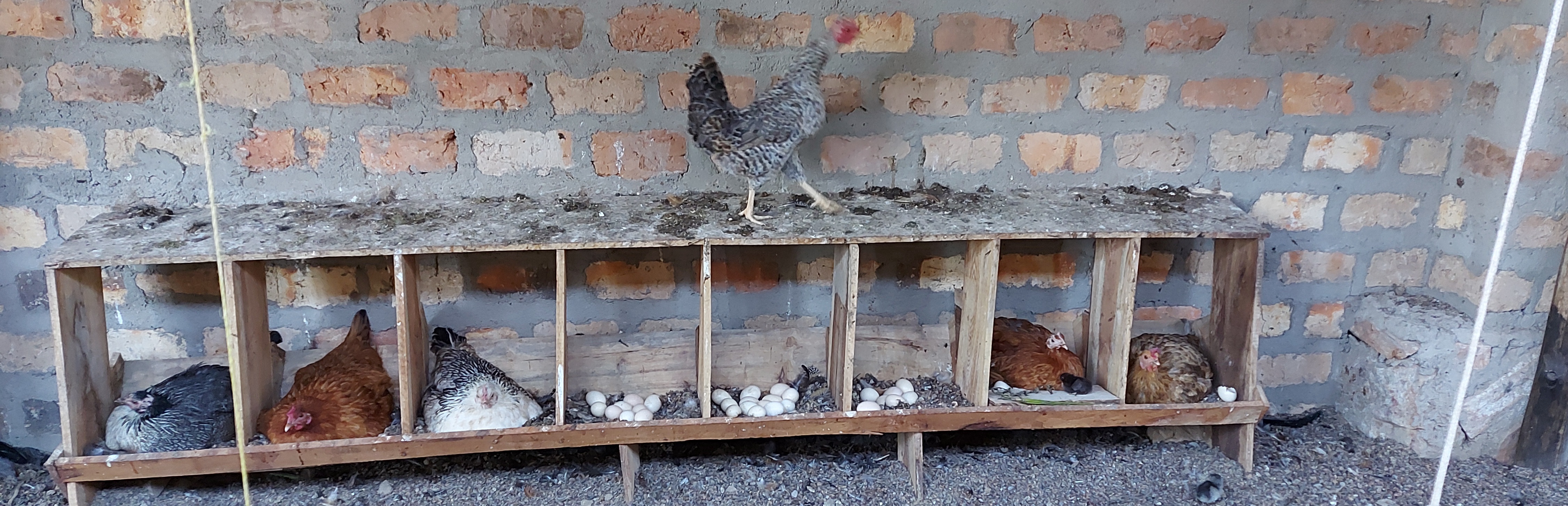
  1. The slanting top about 45 degrees stops the birds from spending time at the top of the laying box, and soiling it (the last image below illustrates this adequately)
  2. The laying box has to be placed close to the wall so that the birds do not climb on the edge
  3. The laying boxes are 1 foot wide to fit a laying bird, or even two especially during peak laying times from 9am to 11am
  4. The laying boxes are also about 1.5′ high so that there is sufficient clearing for the birds and cleaning is a breeze
  5. The floor is slanted at a small angle so that the eggs roll to the wall – it should not be a large angle to break the eggs
  6. Coffee husk shavings can also be added on the floor to keep the eggs from cracking when laid, and to provide comfort in cases where the hens are allowed to incubate the eggs
  7. At the front is a wood barrier to protect birds inside from getting their behinds pecked by those on the ground (this is common as the birds turn to position themselves to lay) and protects the eggs from being eaten
  8. The height of the laying box is about 15cm (0.5′) so that a bird cannot fit below but the birds can get in easily

Core Areas in Poultry Farm Operations that need Daily Assessment

The ever growing demand for poultry products has led to increase in number of people getting attracted towards poultry farming. It is a profitable business prospect.

However, running a poultry farm is not as easy as it appears. Starting and making it a successful business venture is something entirely different. You are not going to be merely a chicken farmer, instead you have to be an entrepreneur as well.

Taking this business to pinnacle requires putting in much more efforts. For operating this business you need to pay attention to the delicate care and maintenance.

Explore some helpful tips and solution to help your poultry farm/s perform at their maximum potential.

Feed Management

The quality of feed remains the main determinant factor in successful poultry farming. You must ensure that the birds must have an easy access to feed. From adequate feeder line height as per the height of the birds to reduce on the feed wastage and mixing feed with litter. INTRACO-CONVERSION FEEDS LTD provides good quality concentrate feed best for your birds.

Water Management

Water being the most important nutrient accounts for more than 70% of the bird’s daily drinking needs. In fact, poultry consume more water than feed during its lifetime. So an abundance of clean water is more than essential. A proper water management process will reduce challenges and maximize performance. Keep a check for:

  • Evacuation of biofilms and mineral build up in water lines using CID2000
  • Pressure, mineral content, quality, height, and accessibility.
  • Cleanliness of drinker lines and containers prior to flock placement
  • Water supplementation with APSA AMNOVIT as an anti stress pack improves egg production

Biosecurity

Biosecurity refers to those measures taken to prevent or control the introduction and spread of infectious agents to a flock. One ought to reduce inlet of diseases to the farm and also spread of the diseases with in the farm. Use of a premium disinfectant in footbaths and car baths like VIROCID helps reinforce biosecurity on the farm

Brooding Management

The period immediately after hatch requires special care and attention for the chicks. You must spend more time during this critical brooding phase. It ensures a good start in poultry production and will impact on the future health and performance of the birds significantly. Maintain brooder mortalities low using CARMINO PLUS or APSA AMNOVIT in water for the first 10 days. Access the duo from any conversion feeds shop near you.

Downtime between flocks

To help reduce transmission of disease between flocks it is essential to keep an adequate downtime, i.e. at least 28 days. This will include appropriate cleaning and disinfection measures plus, it will also allow time to prepare for the next flock.

Litter Mangement

While it is common for the birds to peck at the litter, the same acts as bedding in a poultry house. This means litter condition and quality put a serious impact on the bird’s intestinal health and profitability.

Dusty litter can be an indication that the birds may not be drinking enough. It can cause some respiratory problems like cough and flu. MIST dusty houses with VIROCID DISINFECTANT to reduce on the bacterial load.

In wet litter problems, the ammonia levels in the house rises. This poses danger to bird health potentially as it presents a vicious cycle for intestinal health. It serves as a breeding ground for potential pathogens. This can be a starting point for intestinal stress, further leading to diseases.

Stocking Density

Also referred to ‘crowding’ it is one of the most sensitive issues in poultry industry. Generally, a higher stocking density in addition to crowded housing conditions exerts a negative impact on performance. This will be leading to stress to both the birds As far as a comfortable stock density is concerned, it is said to be of 1 layer bird per square feet and 2 broiler birds per square feet.

Transition Monitoring

This will aid in understanding what is happening in the house. The examination of the activity of the flock and increase in the frequency at which houses are walked in helps early disease detection. Always check on the activity of birds very early in the morning before birds are given feeds, check on the colour of droppings for any abnormalities.
.
Lastly, try to establish a strong communication and coordination between everyone involved in running your farm. This ensures a stronger and more successful management program for your business and birds.

Vet Bahati Robert Juma
0758943235
0786712645
Conversion Feeds Ltd

New Flock Brooder – 7 day status update

The babies are 1 week old just double checking statistics:

  1. Day old
    • Target weight: 35g to 40g
    • Average weight (sample of 100 birds): 38g
  2. 7 days
    • Target weight: 64g to 67g
    • Average weight (sample of 100 birds): 66g
  3. Target date of first egg: December 11, 2018

We are within the breeder’s recommended weight range, so is a good start.

The temperatures are generally warm during the day so no pots for additional heat till 8pm when it starts getting cooler.

The first Newcastle booster dose was also given today via a drop in the eye, we stick to the vaccination schedules like clockwork.

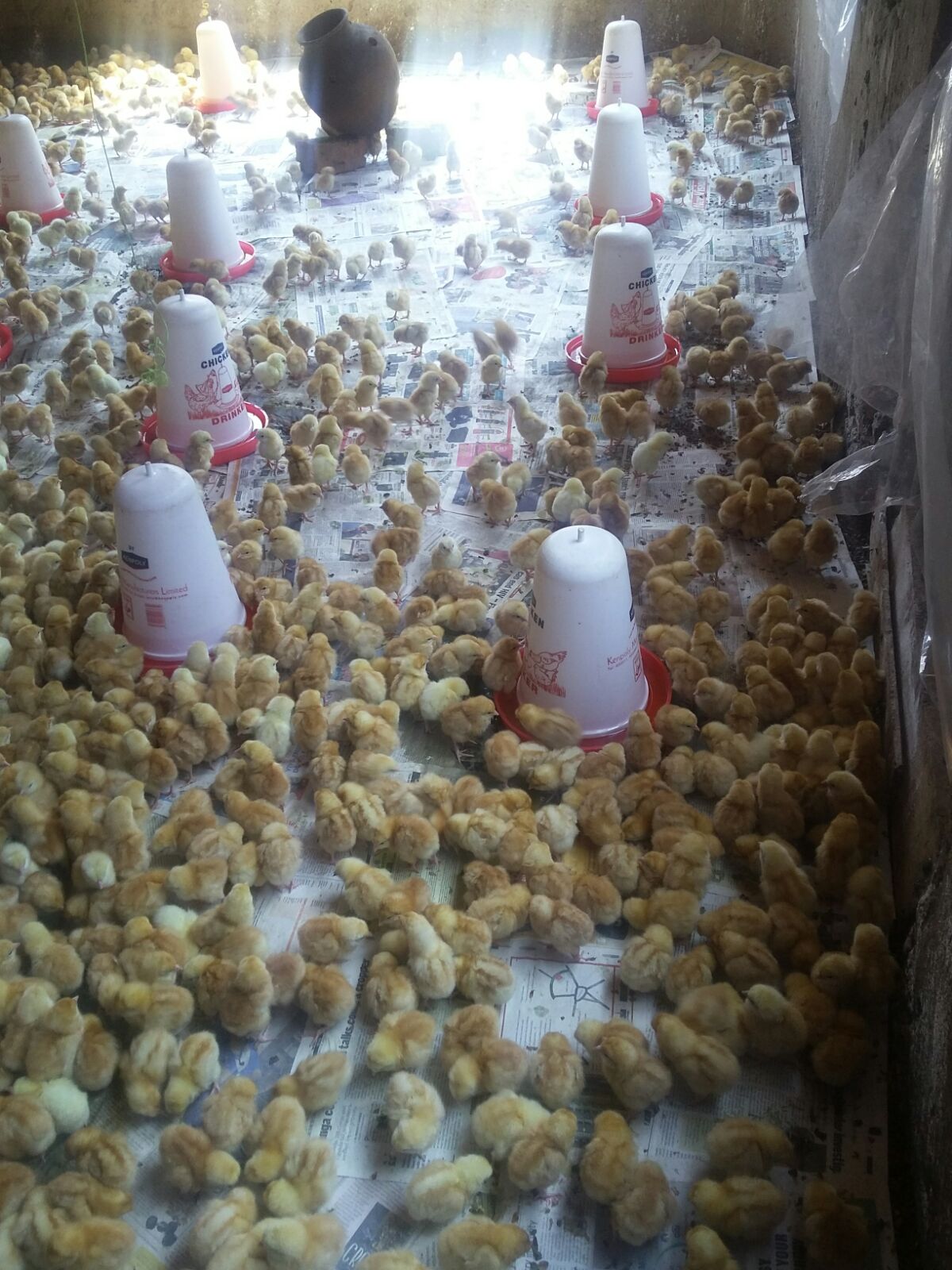
Brooder - view 1

Brooder – view 1

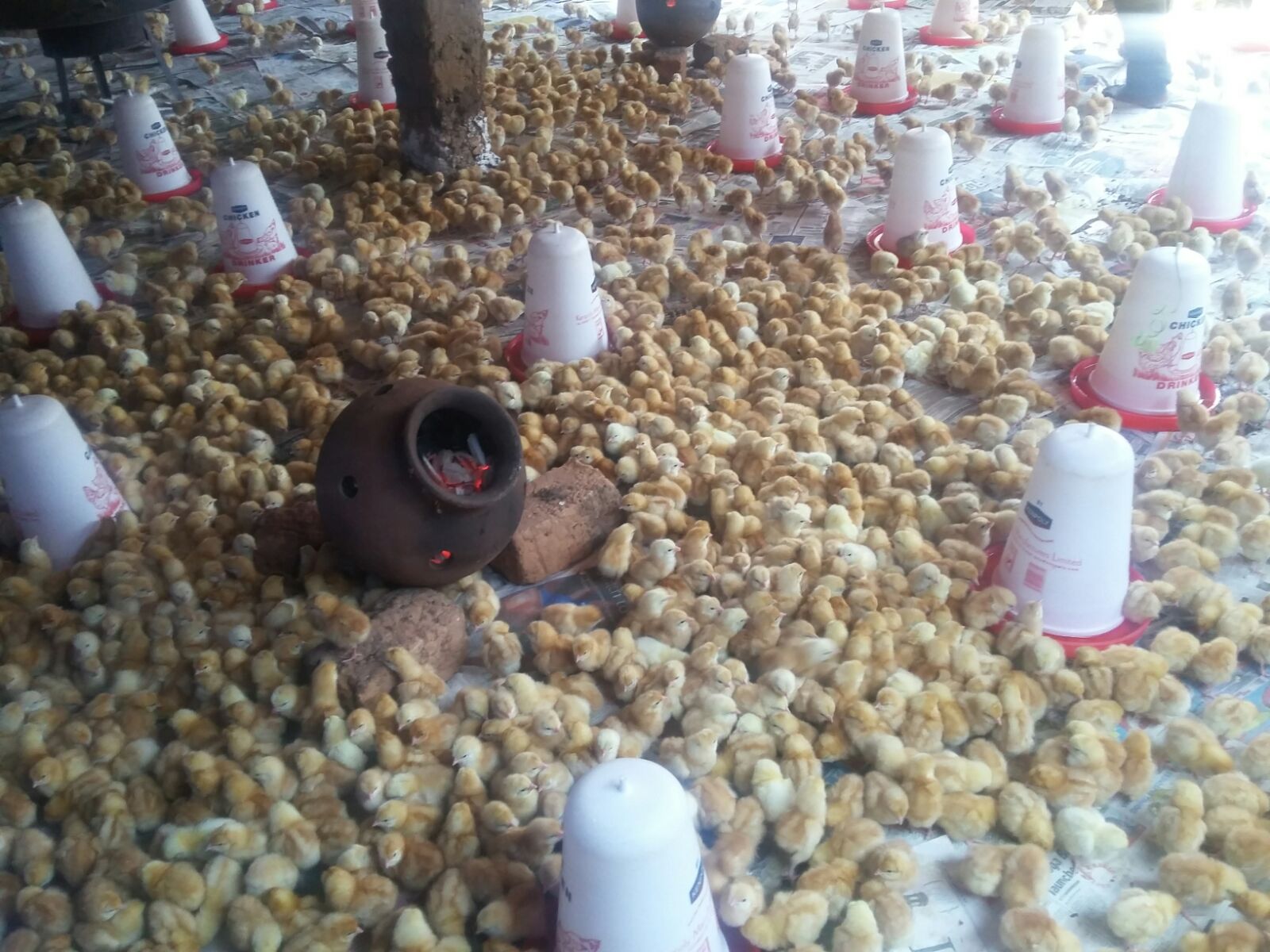
Brooder - view 2

Brooder – view 2

Brooder Week 5 – Learnings and Look Ahead

The chicks are now 5 weeks in the brooder, with a mortality rate of 0.4%, weights less than the management guide (which are based on environmentally controlled conditions) but within range and closing fast, weight uniformity distribution of over 70% and improving.

This post is about lessons learnt in this flock and what we have done differently:

  1. Hired brooding services from a poultry focused service provider who provided a worker for the brooder and a vet who visited regularly: 3x per week in the first two weeks, 2x a week later, currently at 1x per week
  2. The vet provided also supervised and carried out vaccinations as per the recommended schedule
  3. Focused on building immunity in the first 3 weeks, now growth and development of the pullets
  4. Weighed the birds to provide benchmarks for the growth, but only used the data for tracking so did not adjust diets to bring up the weights
  5. Adjusted the chick and duck mash formula, to provide the necessary energy levels and texture for easy feeding.
  6. Provided recommended levels of feeders and drinkers to reduce bullying and contention for deed
  7. Bio-security improvement: started leveraging powdered construction lime for initial disinfection and at entrance to the brooder, disinfectant spraying every week on the premises and proactively spraying inside the brooder with a high mist disinfectant (selected not to have any major side effects for the birds)
  8. Collecting data on feed and water consumption on a day-to-day to better understand the changing patterns – increase in feed consumption is at 4g per bird per week

As always a selection of shots from brooder:

image

image

image

image

Day Old Chicks – Flock 4 Now In Brooder

We are excited to be starting a new chapter at the farm, where we have a new batch of chicks that have come in today, Isa Brown, with the learnings from the last 2.5 years of business.

The changes that we have put in place:

  1. Increased bio-security with a dry lime bath on entry into the brooder
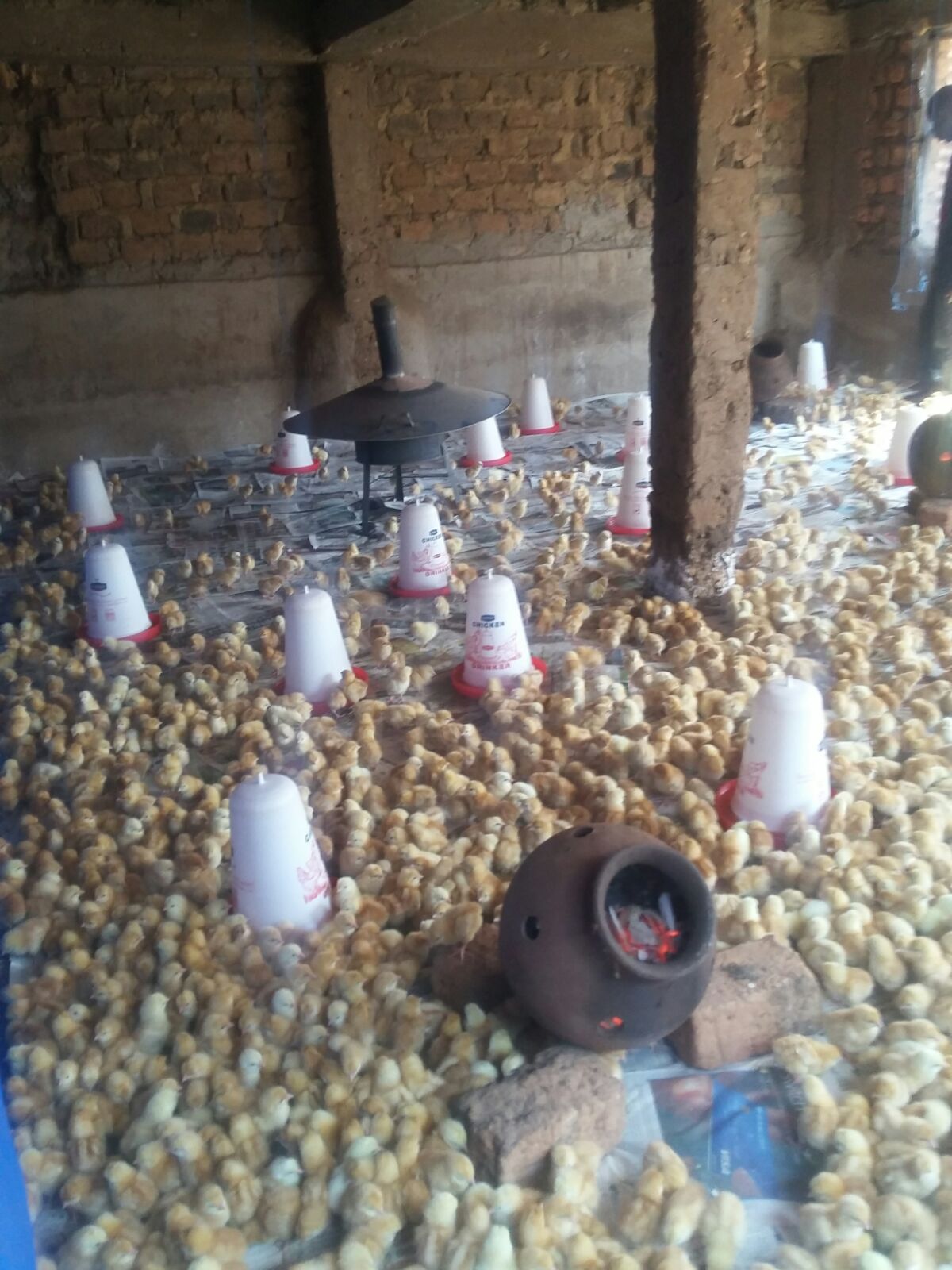
  2. Testing a new “sigiri” in addition to the pots
  3. Using newspapers as a bio-layer over the coffee husks, that will disintegrate and mix with the litter
  4. Contracting with an experienced poultry brooding services company to provide a dedicated person to raise the birds from day-old to about 6 weeks, depending on the progress and learnings that we have had.

Photos below

Brooder - Day old chicks

Brooder – Day old chicks – View 1

Brooder - Day old chicks

Brooder – Day old chicks – View 2

Brooder - Day old chicks

Brooder – Day old chicks – View 3

Brooder Expansion

We are still chugging along, 3 weeks since the chicks came in, with 900+ birds in a space of 12’ x 15 ‘. The birds seem to have outgrown the place as they fight for food despite having about 20 different feeding points and 11 drinkers … 

Based from advice from our expert farmers we have made the jump and are now going to separate the chicks into two rooms to buy some time as we wait to complete their main lodging and accommodation.  

This is what the new place looks like 

image

image

Vaccination – Preparations and Setup

Yes, we had a tough first week, but we lived through it although the losses were up to 10% of what we received, this is pretty high, but being inexperienced we can put it to the costs of learning on the job.

The vaccination schedule is every week for the next 12 weeks, with Newcastle and Gumoboro being alternated, I will post our vaccination schedule once I get round to typing it up. 

Here I explain how we setup for vaccination for those who like me are learning on the job. Pre-vaccination checklist:

  1. No vitamins or other medication in the water for the day before
  2. No water provided to the chicks for 2 hours before the vaccination, apparently to assist in ingestion especially the ocular ones which are administered one drop in each eye

First we created two separate areas within the brooder using plywood 

Brooder with separator for chicks vaccinated and those that are not

The vaccination operation was manned by 3 people – two vaccinating and one picking up the chicks and passing them to the other two. The reason for this is efficiency (due to split roles), but also to ensure that the operation is done quickly so that the vaccine remains chilled.

vaccination in progress

And once the vaccination is done the plywood is removed and the chicks are back to using the whole room as their playground. Also there is countinous monitoring for any changes in the behavior and feeding habits 

brooder after vaccination - chicks roaming around freely

Want to learn more about vaccination procedures from experts you can go to http://www.poultryhub.org/health/health-management/vaccination/