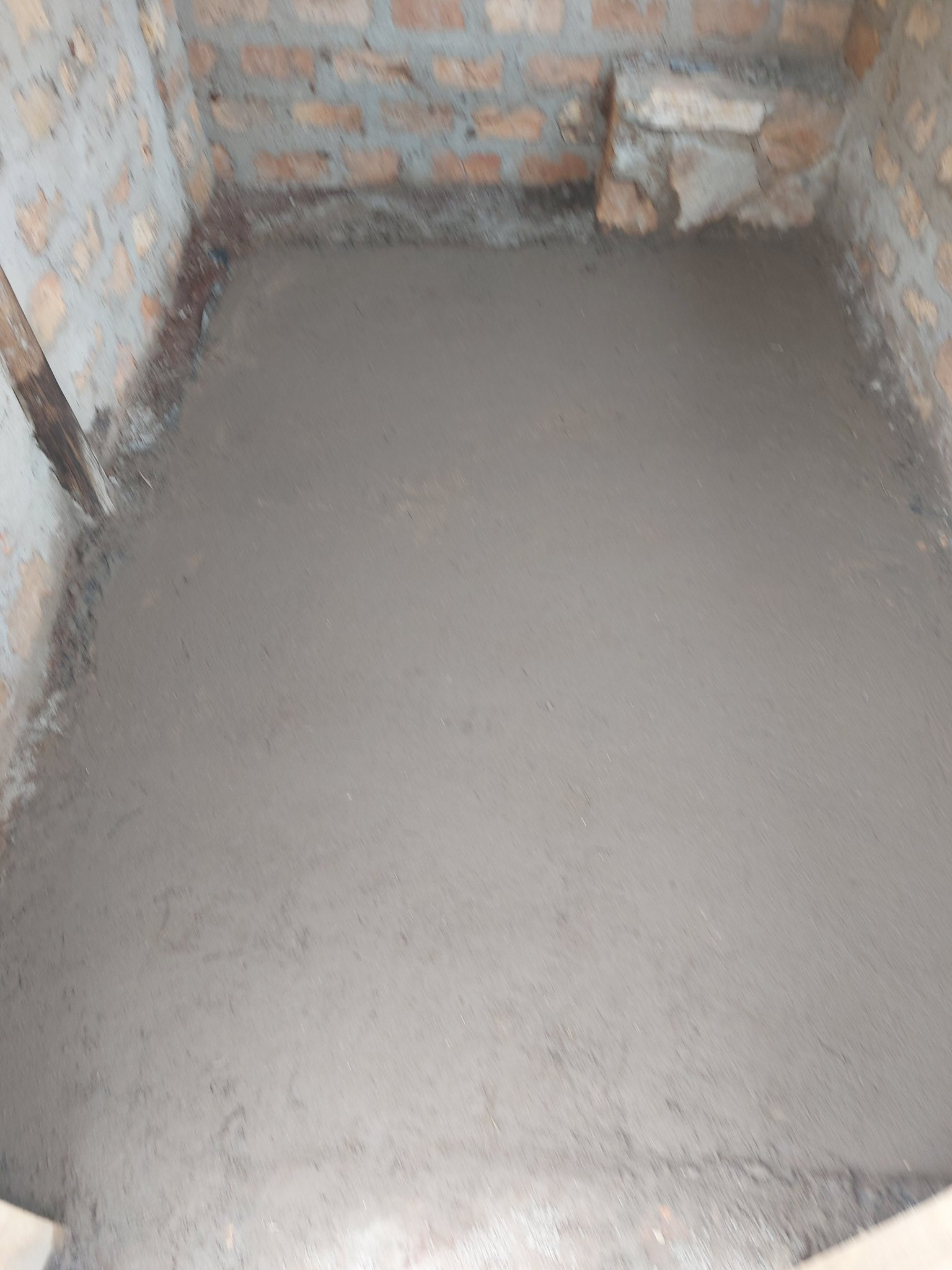
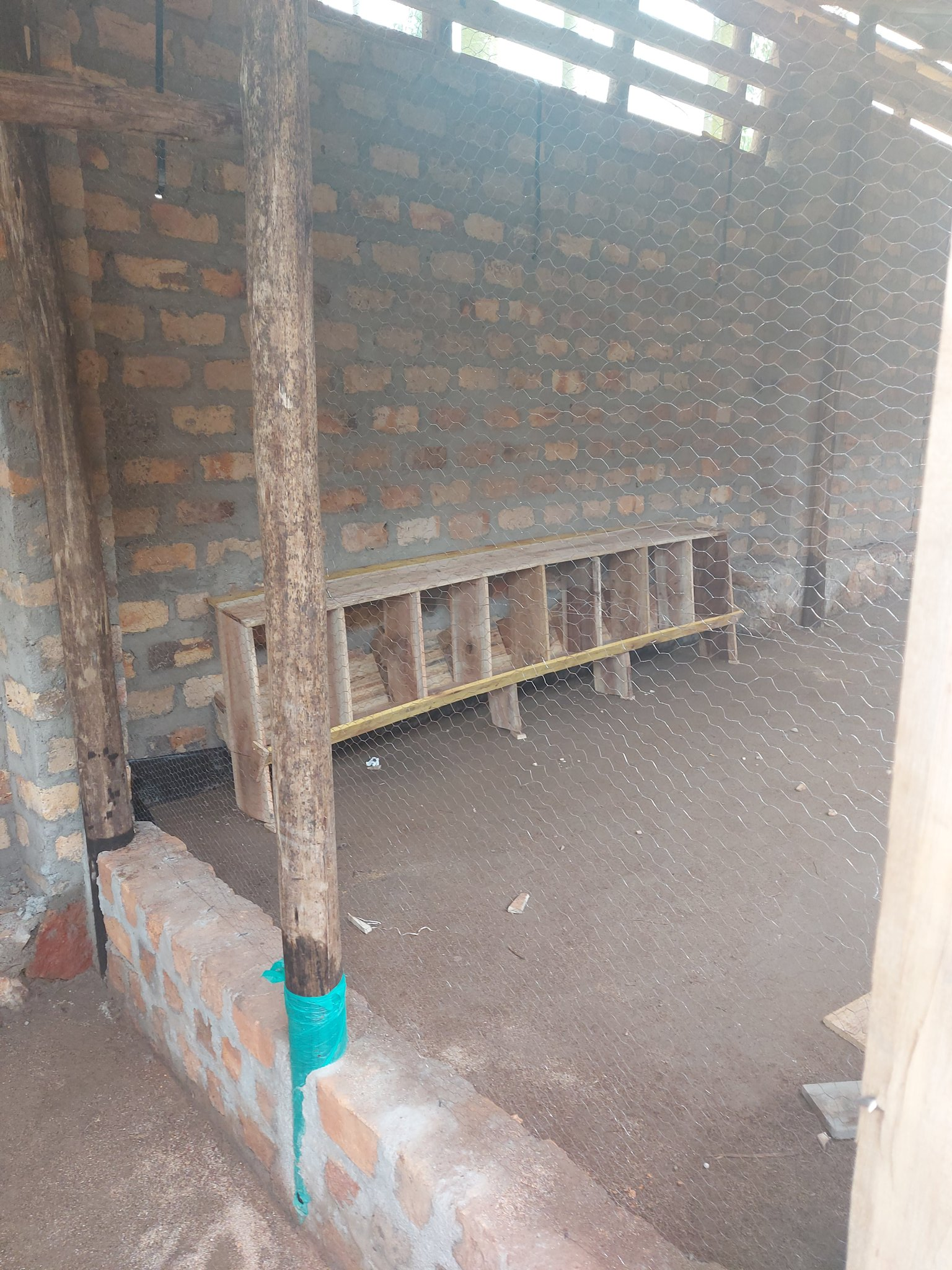
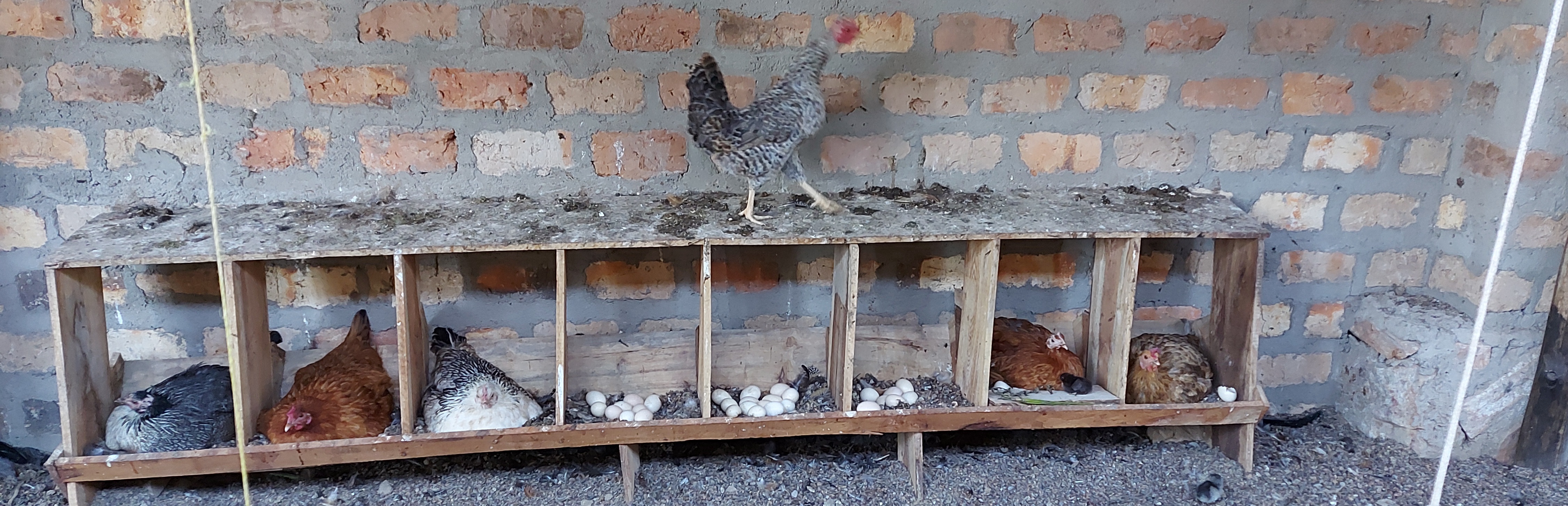
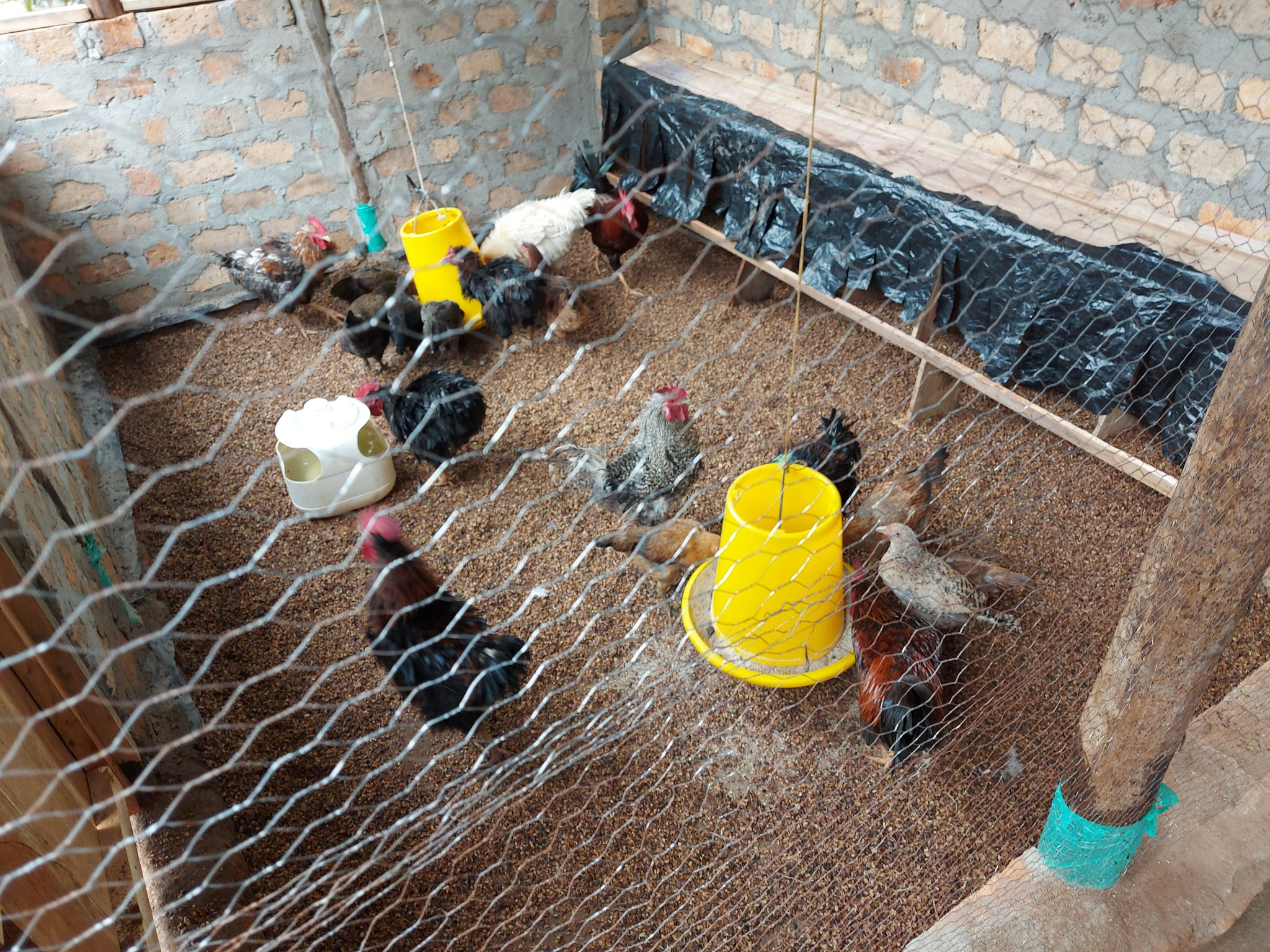
Disinfection and preparation of a poultry house before receiving new flocks

If a chicken house has been used before and you have time, you could try the following approach we use

1.⁠ ⁠Jik in water – 250ml of Jik in 20l of water, spray the whole house, laying boxes and walls until drenched, then leave to dry. This may need 3 to 5 days depending on the weather
2.⁠ ⁠⁠Kisula (rock salt) – 1kg of salt in 10l of water, especially for the walls, corners, inside, under and behind laying boxes – then leave to dry which may need 2 to 3 days
3.⁠ ⁠⁠Use some of the commercial non-toxic disinfectants on the market

That 3-phase cycle helps us get clean out the houses and slow infection builds

When the birds are in we also disinfect spraying with a non-toxic chemical once every 2 weeks to prevent disease build-up in addition to other litter management techniques

Building a Chicken House – Experience

This is to share our experience building out a new local chicken house as well as the ideas that we considered, as documented on X at https://x.com/kungufarm/status/1352324851948781572?s=20

There was space on a wall, which we considered as the space for the home chickens. The design decisions we made are as follows:
1. It would be 1 iron sheet wide, 9 feet long, giving a width of 8 feet to cater for the slope.
2. The length would be 35 feet, with 3 rooms each 10 feet wide, and a store of 5 feet to store food, and equipment and maybe act as a sickbay.

Once the foundation was completed then we roofed it to ensure that it met the planned size without requiring changes

The walls are low, usually 4 to 5 bricks high, however we increased this especially for handling water sprays from the roof, and being on a slope they are of different heights

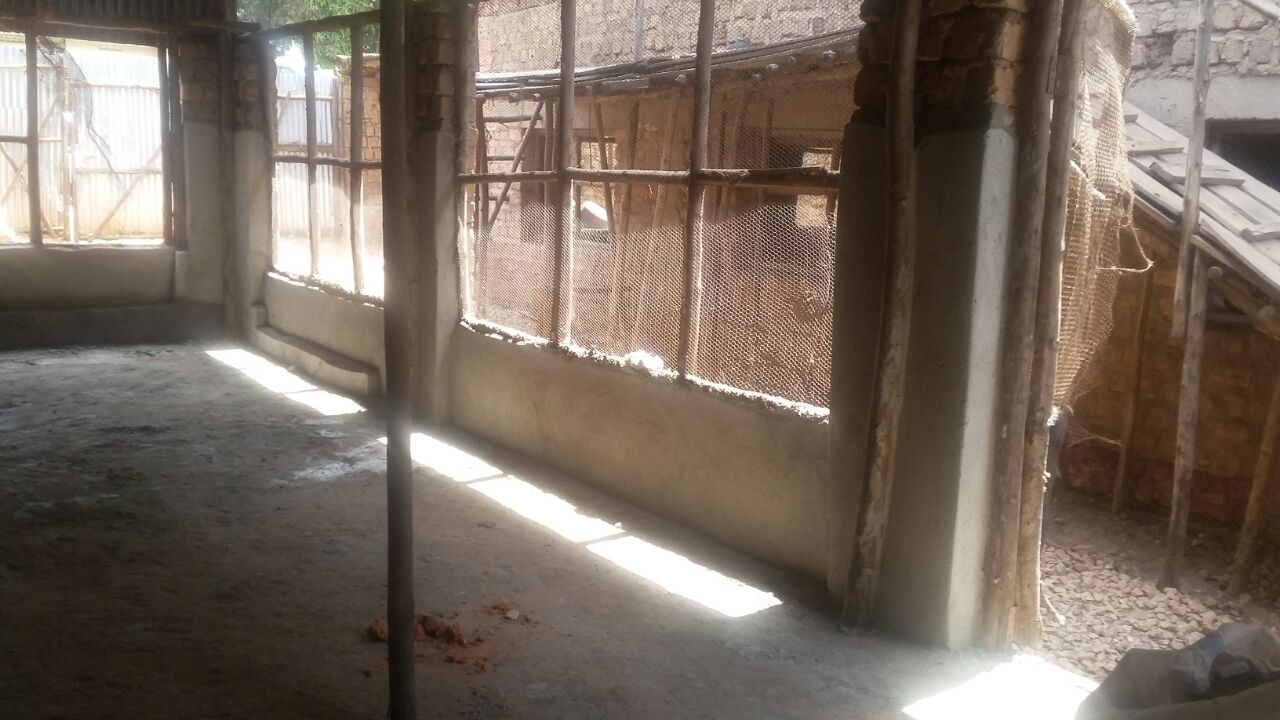
Add the chicken mesh, as you may notice there are 3 rooms each 10 feet wide, with its own door to enable separation of different birds as may be needed. The last room is the store for storage. Laying birds need a lot of aeration for proper growth so chicken mesh is used in the spaced.

When a room is needed as a brooder we cover the windows with plastic to maintain the heat within the room

The floors are concrete to ensure the birds do not dig to the soil underneath transmitting diseases

The laying boxes are next where we expect the birds to drop their eggs

2020 Plans

As the rest of the world is making New Year resolutions we have solidified our 2020 plans

  1. Grow current flock from 2,200 to 3,200 which is our installed capacity. This will enable us to leverage our 6 year learning journey and start turning it into profit
  2. Start livestock farming – this is part of our long term strategy of vertical integration and multiple revenue stream. The plan is
    • The livestock will be zero grazed and growing the numbers organically
    • Start goats herding from the does that we own but do not have a home. Construction of a goat pen
    • Diary farming – start with a heifer mid year as we figure out the feeding needs and processes
    • Immediately we shall get access to dung and urine which will improve the yields of our banana plantations
  3. One of our plantations seems to have a persistent infestation of Digitaria scalarum Chiov. (gramineae) commonly known as lumbugu, and despite all the hard work the soil quality too does not seem to be improving. So we are going to cut this down around the March rains, and plant sweet potatoes, followed by a maize & beans combo to provide alternate soil usage. This will provide a needed 18 month fallow period to better yields post 2021. The plan is to use the biomaterials – stems & leaves  mulch for the one which will be retained to give the necessary soil protection.

Looking forward to a busy 2020

An Alternate Business Model for Small Holder Farmers – Free Range Indeginous Chicken

The commercial poultry business is now the rage with the increased demand for eggs and broilers, however it is fraught with peril due to the flock management needs, unstable prices of feed ingredients, weather (oh yes ask any farmer what the effects of the heat wave have been), feed formulation knowledge and not forgetting disease management due to the high numbers maintained in closed spaces. This business model requires specialized breeds whose genes have been formulated to grow fast (meat), have high productivity (layers) if managed well. This raises the capital and operational costs, which many cannot afford.

Based on our experience with commerical poulty, we would like to share an alternate business model, and our current progress with it, as a way of stimulating home-based agribusinesses. These are local birds, indeginous yes, which many have shunned over the years for kuroiler breeds (unfortunately we are not a big fan) so went back to our roots.

What are the major challenges with indeginous breeds that have been put forward:

  1. Diseases wipe them out
  2. Low productivity (eggs) and low weights (meat)
  3. Long growth times to achieve milestones
  4. Predators – rats, dogs and “humans”

In our experience, the business model and thinking is that the business model is what is wrong, leading to mismatched expectations. The commercial approach fot indeginous birds is not selling bulk in low value, but low numberrs of high quality and value.

What is our approach:

  1. The value of the local flock cannot be realized quickly, and has to be built over time so that it it self sustaining
  2. Leverage the learnings from the commerical poultry to fix some of the issues such as:
    • Disease management – follow the vaccination schedules for the commercial breeds to build immunity and reduce infection
    • Low productivity – supplement the diet with 30-50% commercial feeds to fix any deficiencies
    • Local additivies – leverage local plants such as aloevera, pupmkins, yams,  tree leaves (will provide names later), millet, sorghum, popcorn to supplement the diets
  3. Infrastructure:
    • Housing – ensure adequate space for the birds to spend the night away from predators such as dogs, and rats (yes we lost 10 1-month chicks)
    • Keep the place clean – oh yes this requires investment, but reduces on disease outbreaks
    • Feeders and drinkers – for local birds, are you kidding me, they can scavenge! Oh yes, look after them well and they will multiply
    • Free range area – demarkate an area for the birds to move around looking for food and scratch around, otherwise they collect diseases as they roam and also are prey for predators. We have not gotten to this stage yet but are getting there as the numbers grow
  4. How do we intend make money through the sale of:
    • Breeding stock – pullets and cocks since their lineage can be traced
    • Cocks for traditional ceremonies like kwanjulas, gifts to parents
    • Yellow yolk organic eggs at a premium
    • Pullets and cocks for food – very tasty for special occasions
  5. What do the numbers look like? This is a summary of the numbers in a way that makes sense on growth. All the chicks were brooded by their mothers
Month Additions Losses Notes
October 2018 3 Initial stock – 1 Cock and 2 pullets
November 2018 6 pullets,

18 chicks

1 pullet,

9 chicks

Purchase of pullets.

Theft of a mother and her 9 babies,

December 2018 10 chicks 8 chicks Predator birds and wild animals
January 2019 15 chicks, 6 pullets 3 chicks A purchase of pullets from upcountry travels
February 2019 10 chicks 3 chicks Predator birds and wild animals
March 2019 4 chicks 8 chicks Rats killed the chicks so moved the mother to the main house
April 2019 4 chicks 8 pullets Had lots of dogs around the house during mating season so ate the birds in the mornings

As of today, 28 April 2019, we have 2 hens brooding 18 eggs, and a laying hen with about 10 eggs – they tend to start brooding at about 10 – 12 eggs, that seems to be the natural cycle.
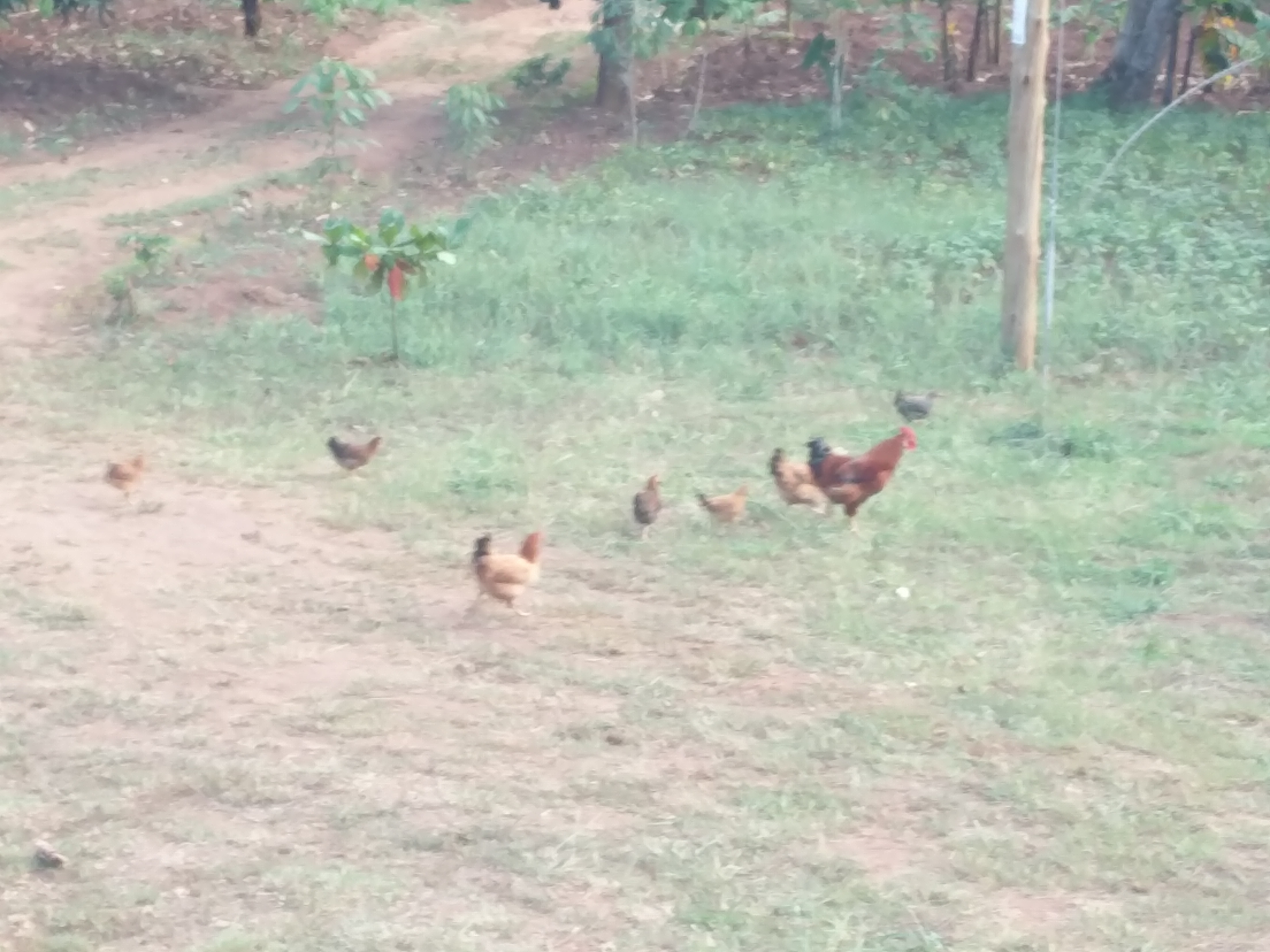
2019-04-06 18.24.04

Happily walking around with the main cock
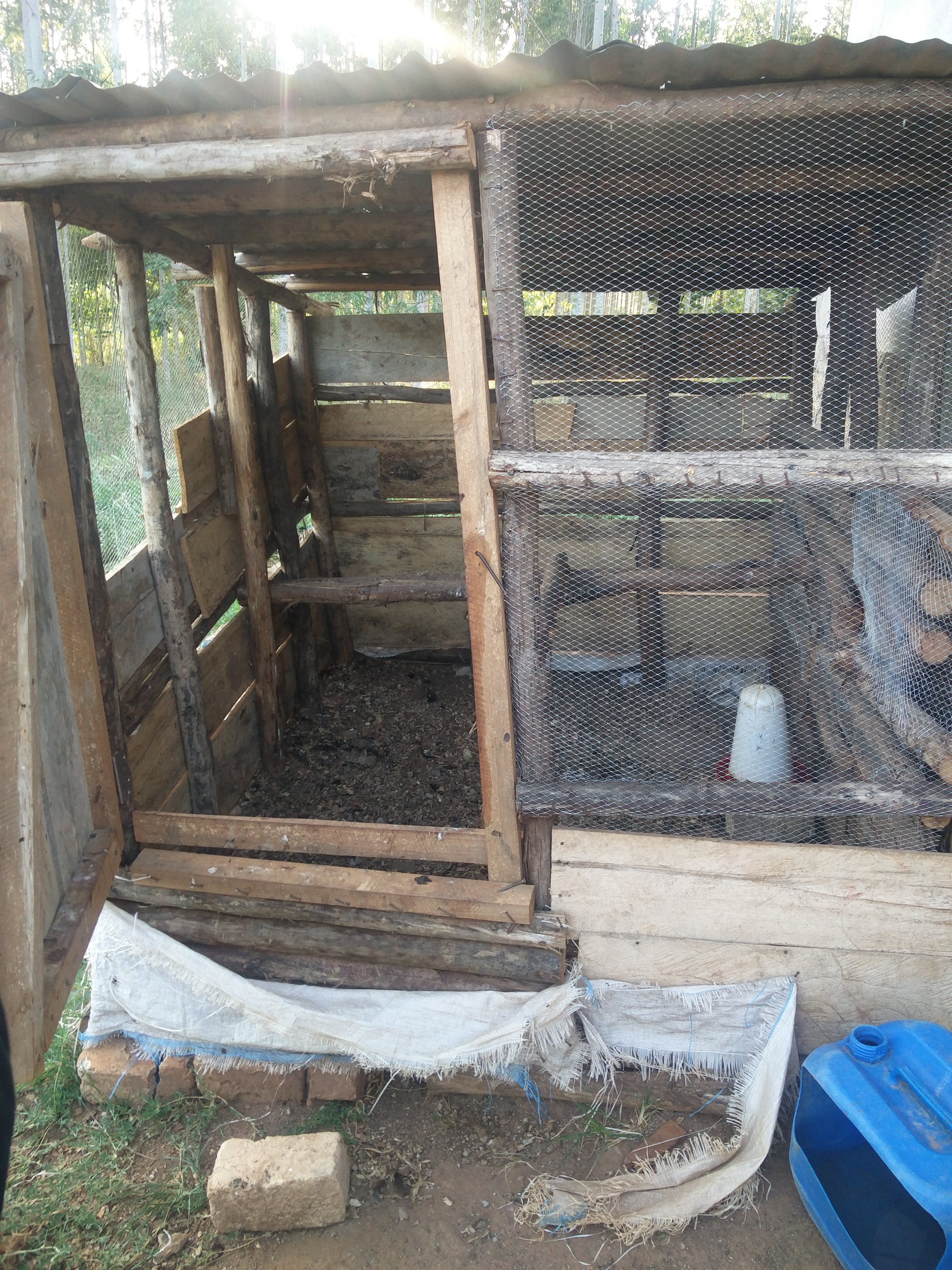
2019-04-06 17.59.51

Chicken house from locally made materials and frugal designs
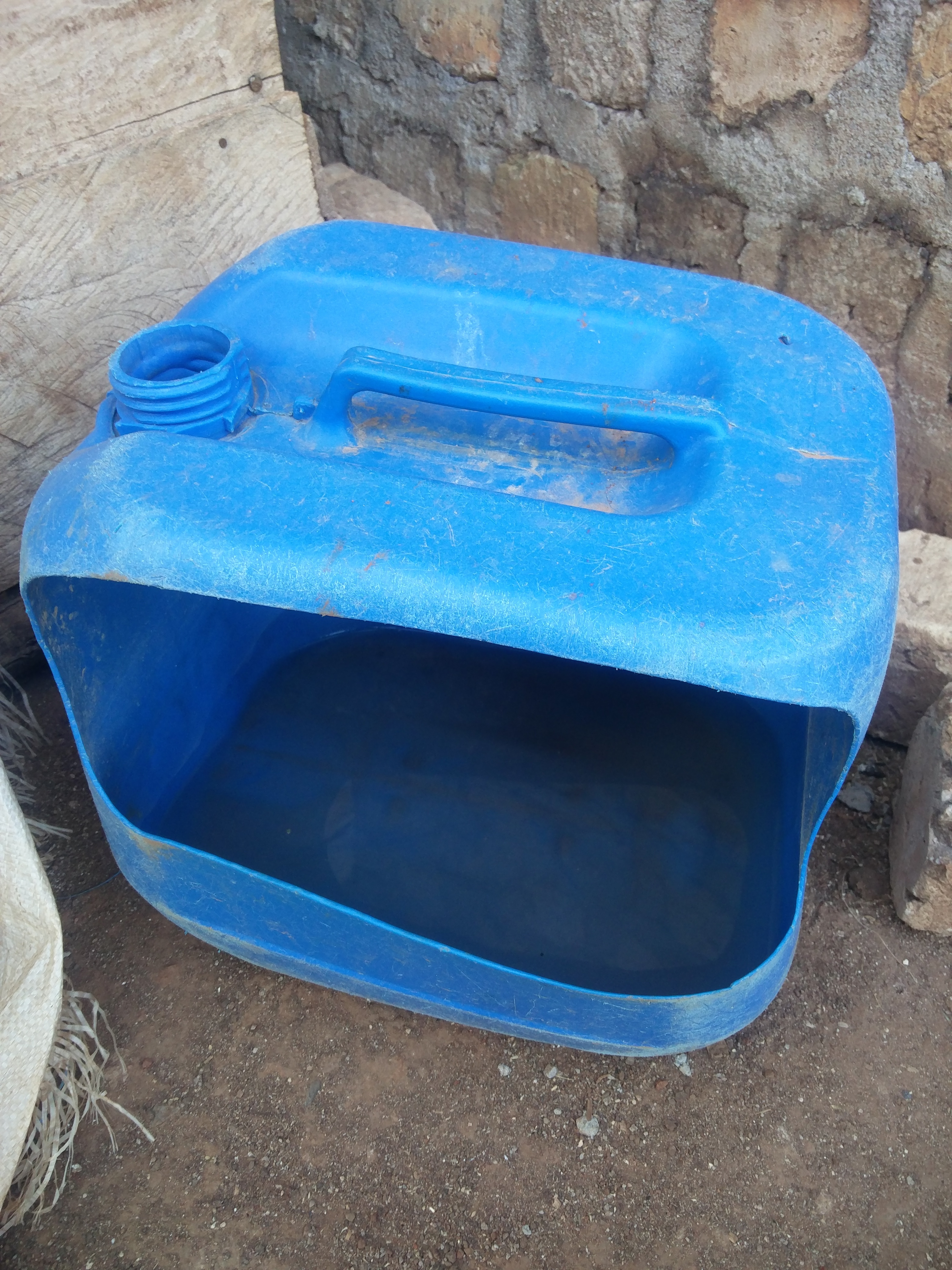
2019-04-06 17.59.11

Drinker from jerrycan leveraged from commercial deep litter operations
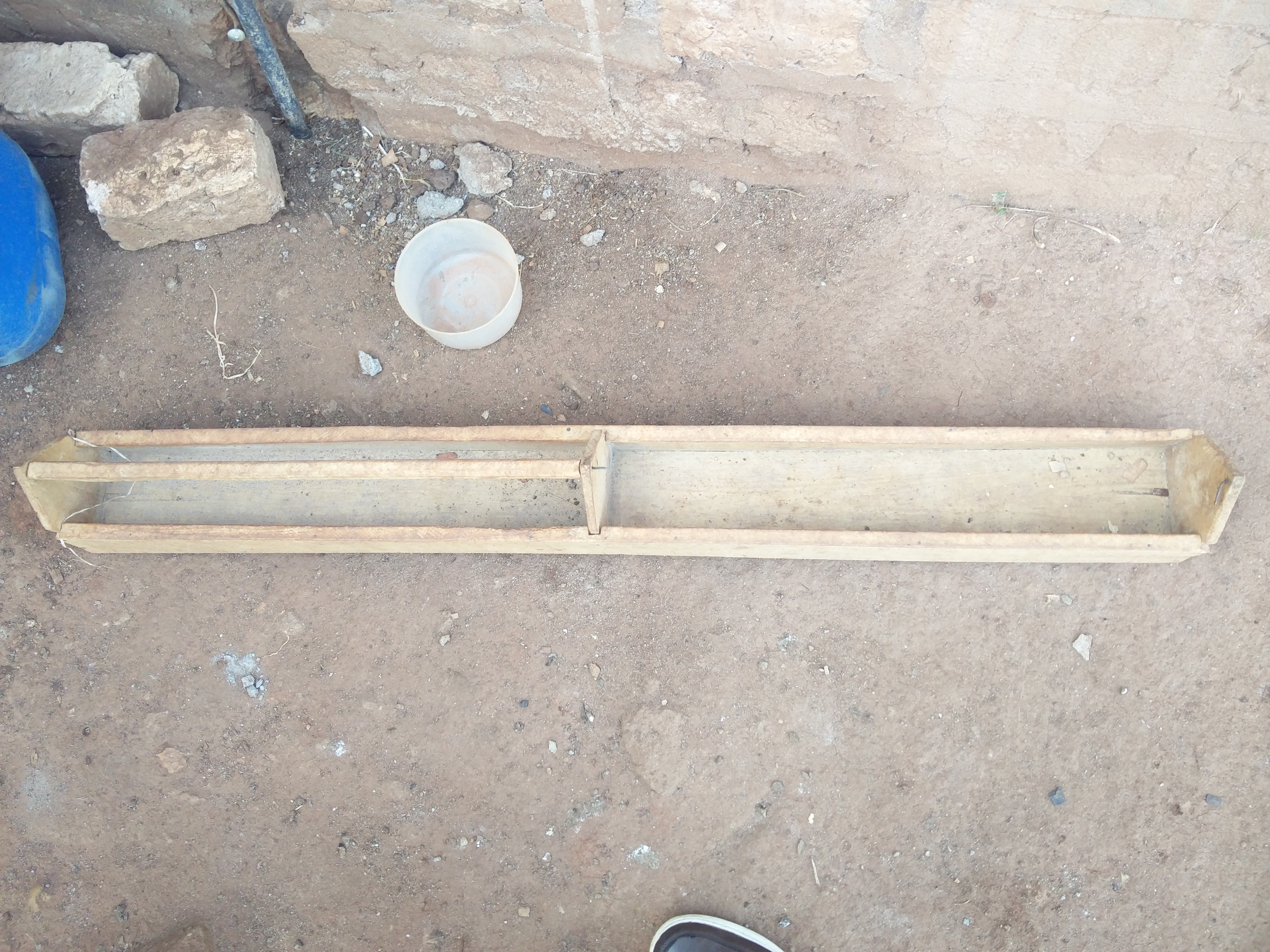
2019-04-06 17.59.17

Locally made feeder usually used in deep litter

This Twitter thread covers similar ground for the construction of the house and how the flock is proceeding https://twitter.com/kungufarm/status/1080144748252418048?s=20

August 2018 – New Flock

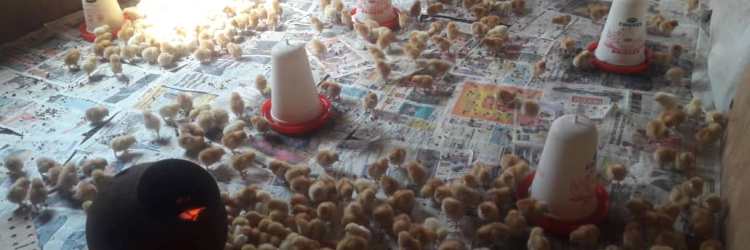
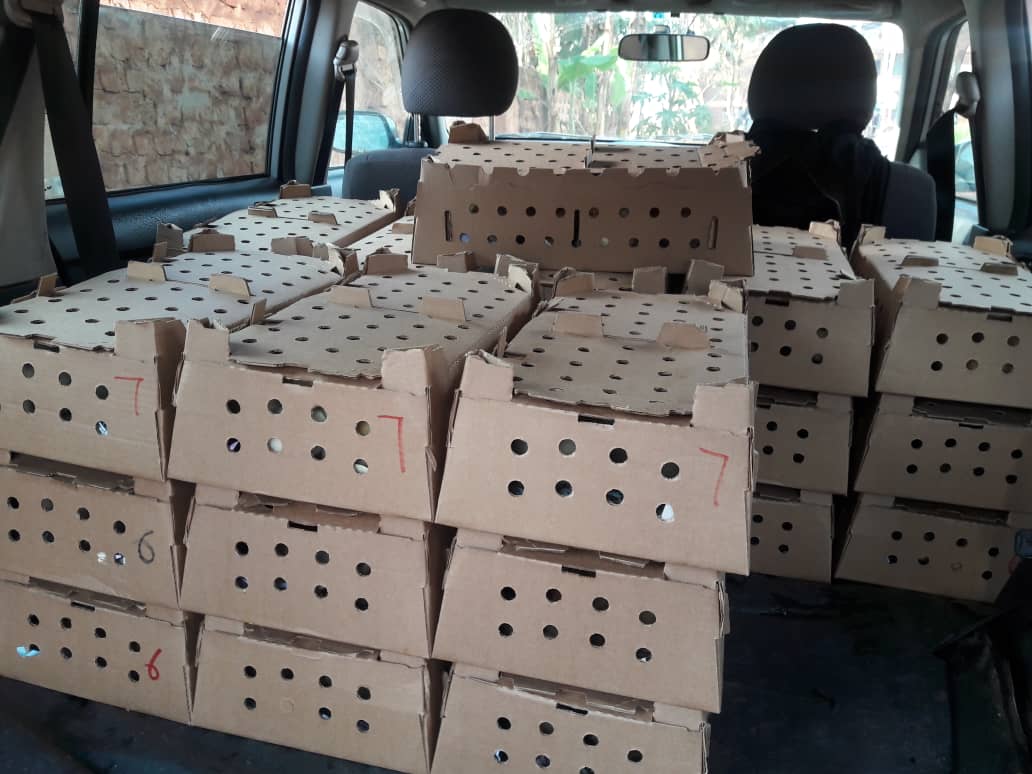
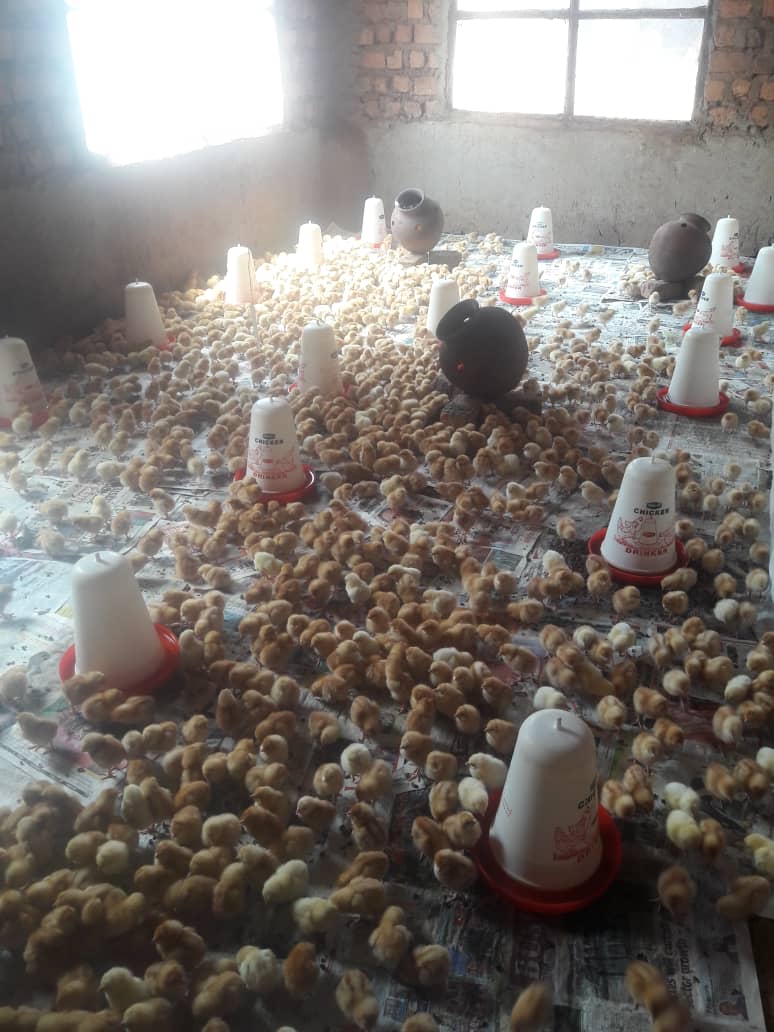
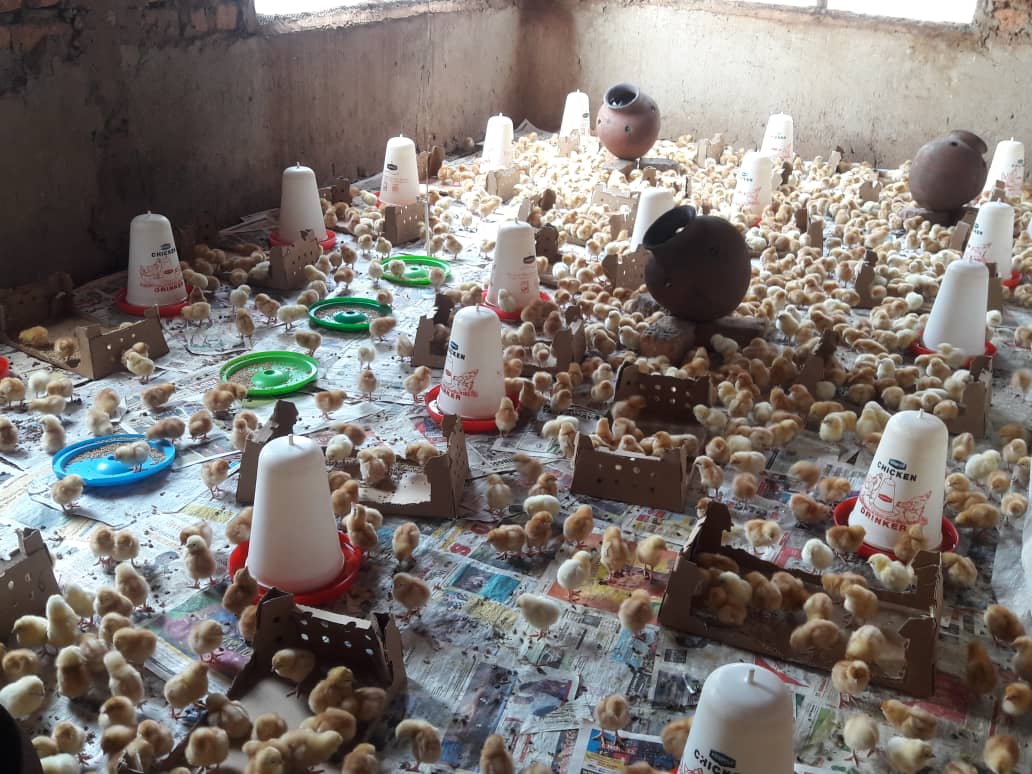
Exciting times, as we have just gotten a new flock of day-old-chicks from Asiima Agro Concern. One would assume that after 5.5 years in the poultry business, this is normal but we are excited as we have gotten the rythmn for raising these birds.

A picture is always worth a thousand words

Transport to a new home

Transport to a new home

Now in brooder before unpacking

Now in brooder before unpacking

Running around in their new home

Running around in their new home

All active and ready

All active and ready

Local technology for temparature control

Local technology for temperature control

January 2017 – Recirculating Aquaculture Setup Progress Report 

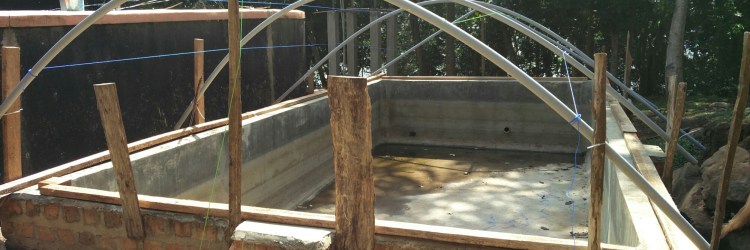
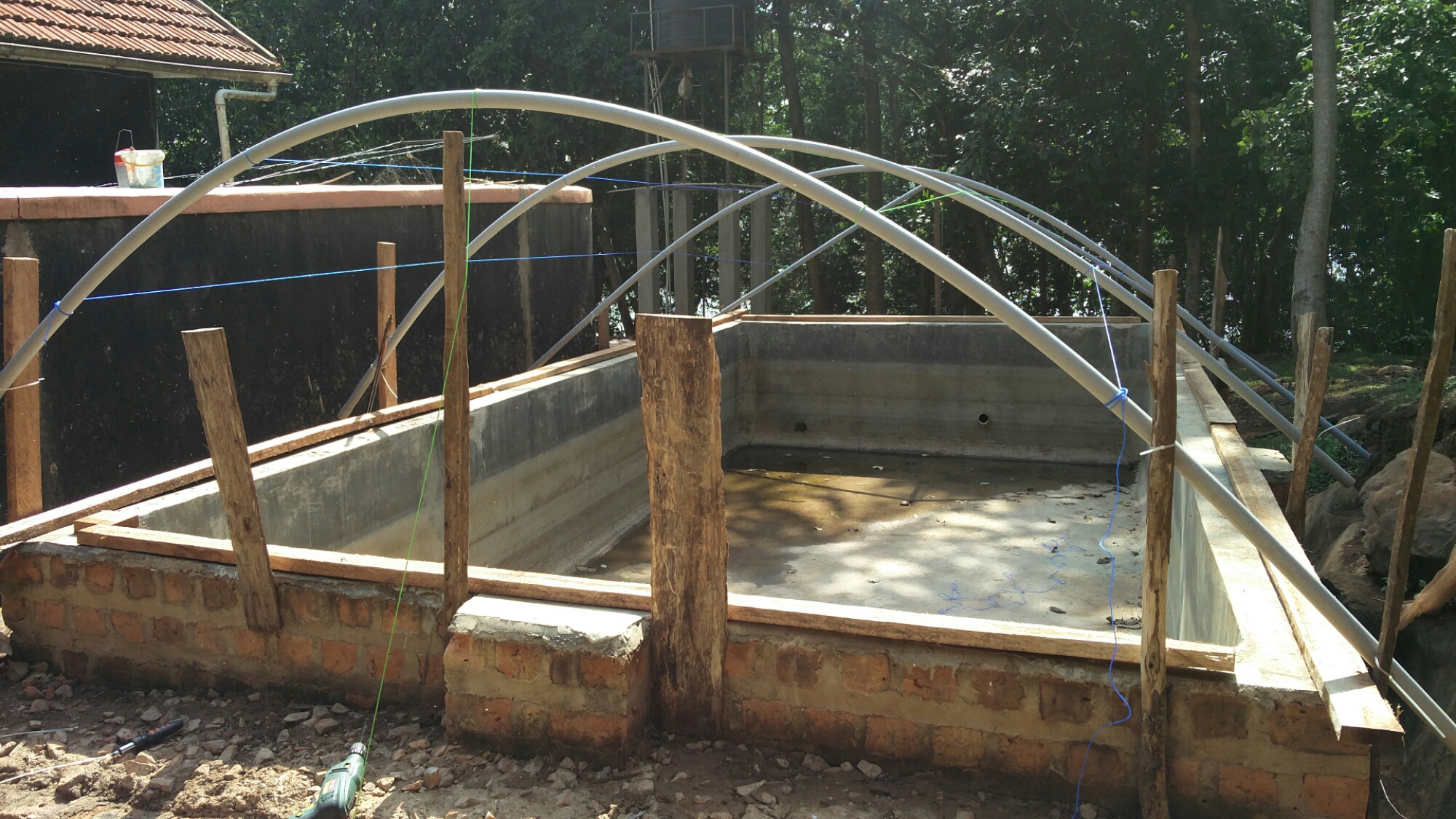
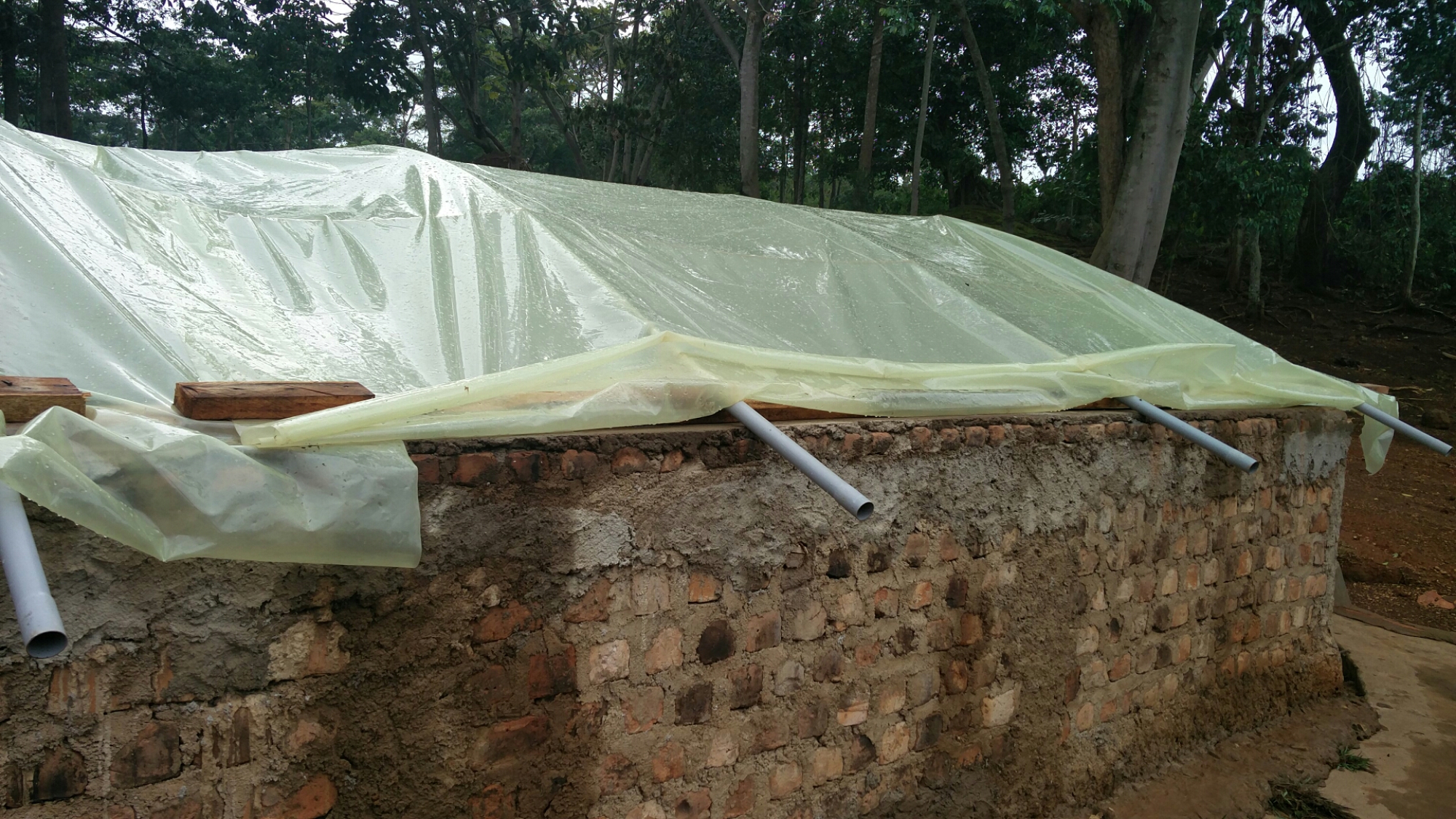
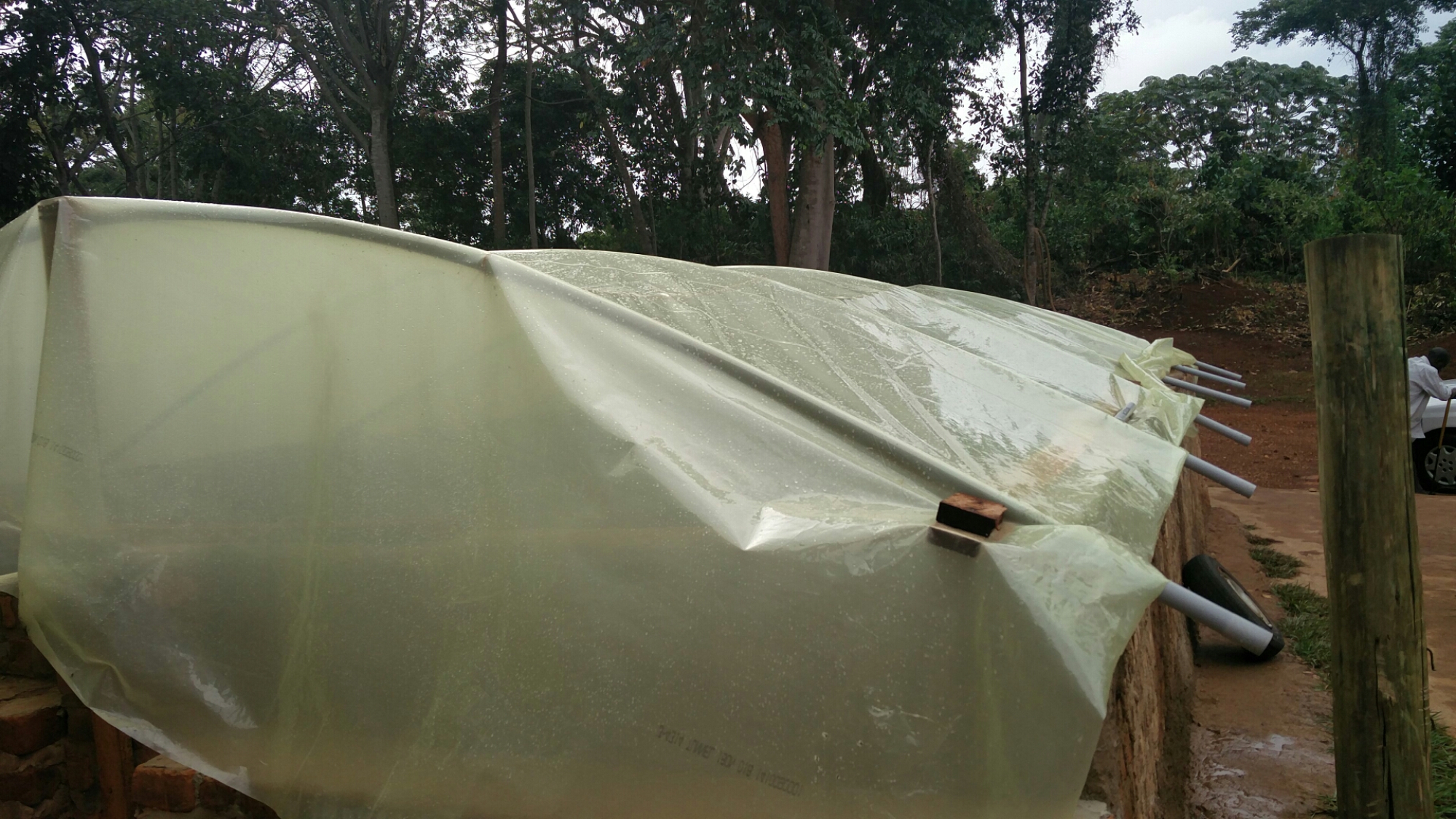
We have been working on setting up a recirculating aquaculture system to support tilapia farming, and currently we have been able to get a greenhouse like effect using a mix of wood panels with plastic pipes to get the warm environments. Next is to get pumps circulating the water and the filtration – both solid and bio-filters running before bringing the next batch of fry probably in March 2017.


9 month Poultry Report Card

A exciting day, our new batch of Isa Brown layers from Asiima Agri-Consult Limited makes 36 weeks and 2 days, finally hits 90% productivity. The productivity journey has been as follows:

  • First egg – 19 weeks
  • 85% to 87% for 10 weeks straight from week 27 to 36

Our secret so far is building on prior experience:

  1. Feed quality – this is outsourced to a supplier whose quality and reliability have been consistent over r the last 3 years
  2. Formula – we r using a basic formula to leave room for improvement as the birds grow older
  3. Biosecurity – use lime at the entrance, also adding a little to the litter, routine spraying outside the houses on a weekly basis. Nobody is allowed into the site – not guests
  4. Vigilant management – the operations manager spends an equivalent of 3 days at the site every week with random visits to support farm management
  5. Fanatical record keeping – diligent record keeping to track trends, and spot patterns in behavior
  6. Fortnightly assessment by a vet as an preventive management pattern

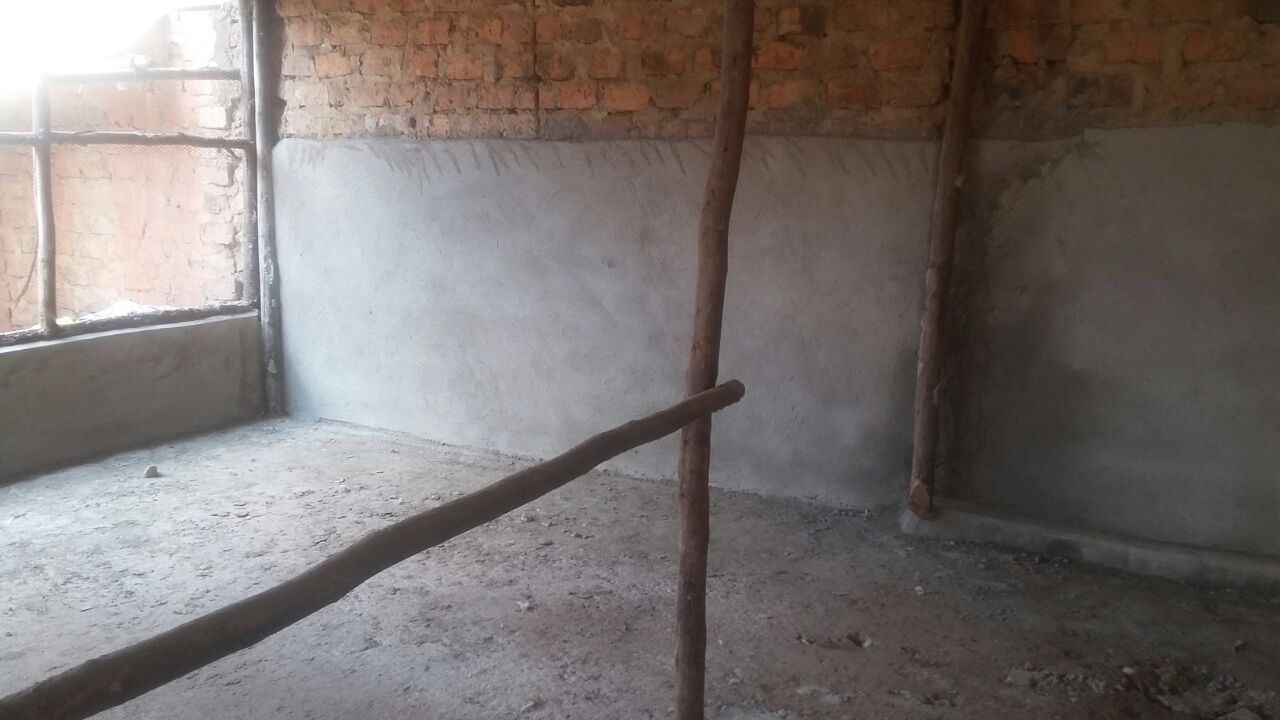
At the same time we are preparing for a new batch of chicks, so repairs to an existing house are underway by plastering the walls exposed to the birds, repairing the floor and replacement of chicken wire mesh.

Once the repairs are completed, a contractor has been hired to disinfect the house which will be the subject of another sharing session

image

image


Poultry Feed Economics 101 – Changing Feed Supplier Scenario 

Genesis East Africa

This is an interesting scenario brought about by Dr. Samuel Sewagudde of Genesis East Africa Ltd in one of a poultry Whatsapp group that highlights the challenges poultry farmers face in their business choices. I will use this scenario to provide step-by-step analysis of how to build the data for decision making.

Speaking of Economics, Catherine usually buys layer feed from Matama Feeds Ltd at UGX 800 sh a kg and her birds lay  averagely at  72%. At a recent Farmers Expo she met Augustine who works for Mulegi High Quality Feeds Ltd who convinced her that she would achieve 80% production if she uses Mulegi feeds. Mulegi layer feeds cost UGX 1000 sh per kg. Now if Catherine sells a tray of eggs at UGX 8000, Should Catherine switch and use Mulegi feeds?
In this computation the following assumptions have been made:
  1. Each bird eats 125g of feed per day
  2. The costs of the feeds include transportation so no additional costs are incurred with the feed
  3. There are no additional costs incurred in the sale of the eggs
Using the above information:
  1. Matama feeds cost UGX 100 per day while Mulegi Feeds cost UGX 125 per day
  2. At 72% production each bird generates UGX 192 per day (8000 * 0.72 divided by 30) while at 80% production the revenue per bird rises to 213/= (8000 * 0.8 divided by 30).
  3. The increase in cost of feed is UGX 25/= per bird per day while the increase in revenue is UGX 21/= per bird per day
Therefore changing feed providers means that Catherine will spend an additional UGX 4/= per bird per day, therefore the increase in production does not meet the increased costs of feed.
The moral of the story therefore is increased production does not always translate to increased profitability

Migration to Concrete Fish Tanks

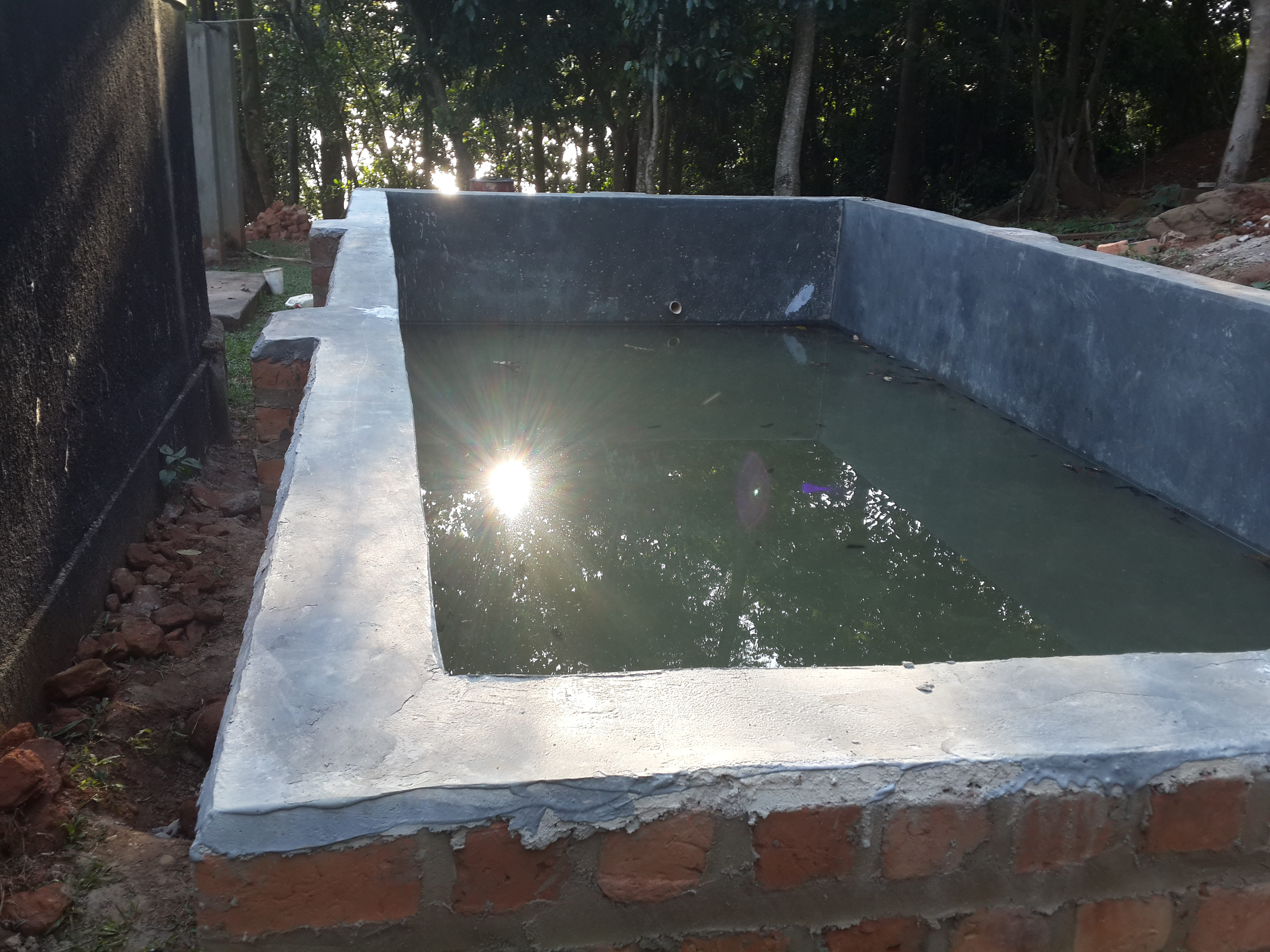
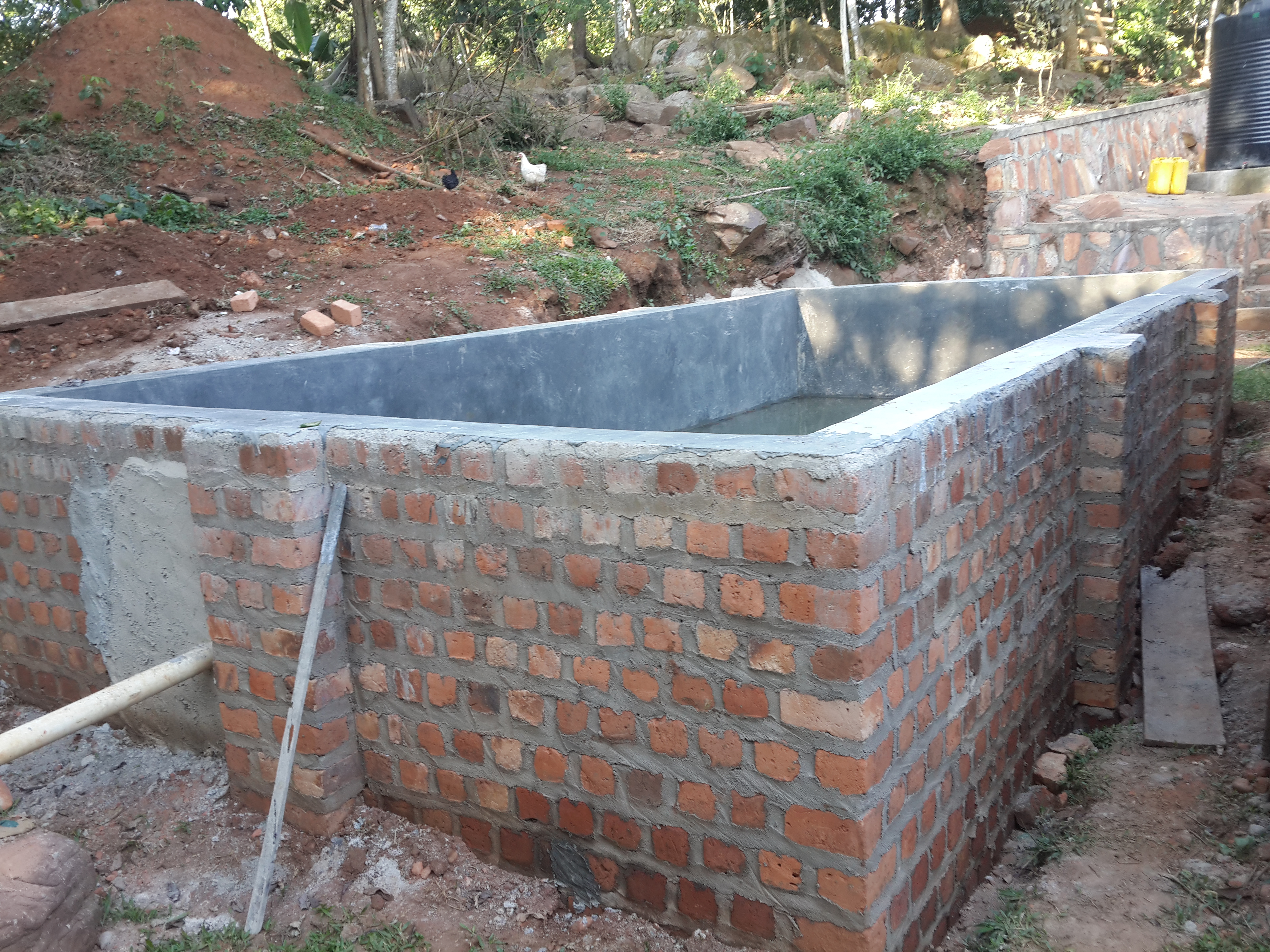
After a 1 month test of using polythene tanks with wooden supports which seemed lower cost at the beginning, we have decided to move to concrete tanks that surprisingly have a similar capital cost envelope with the benefit of longer life span.

The design of the tanks is:

  1. Bricks laid in header bonds (with the small face of the brick laid at the side)
  2. An reinforcing column every 6 feet on the short side and 10 feet on the longer side to provide additional strength
  3. A finer mix of the mortar used for laying the bricks (3 wheelbarrows of sand per 50kg bag of cement)
  4. Bottom was a concrete slab with a slight incline of the floor towards the outlet to help with cleaning
  5. The finishing includes an additional mix of water proof cement in a ratio of 1kg of waterproof cement per 50kg of regular cement.
  6. The outlet is placed 1 foot from the bottom so that not all the water drains out of the tank in case of accidental leakage

As always a picture is worth a thousand words:

Tank frame with header brick layout

Tank frame with header brick layout

Finished tank longitudinal view showing location of the outlet

Finished tank longitudinal view showing location of the outlet

Finished tank longitudinal view 2

Finished tank longitudinal view 2

Inside view of the tank

Inside view of the tank

Lengthwise view of the tank

Lengthwise view of the tank