Get me outta here!

A Ugandan Farmer

Adventures of a farmer in Uganda who is learning on the job but is determined to succeed against all odds

Menu

Skip to content
  • Home
  • Terms and Conditions

Author Archives

ssmusokehttp://ssmusoke.comI am a technologist at heart working with software development teams deliver custom software for clients. In previous roles in other organizations, I have assisted customers identify user and business needs, defined technical specifications to meet those needs, evaluated vendor capability and supervised implementation of complex IT systems. I am passionate about growing the technology community in Uganda and on the continent. I believe in the mantra “Coded in Africa, for Africans by Africans”. My emphasis during this journey is to ensure that women are equal participants in the African technology revolution.
ssmusoke's avatar

Bongole Farm Experience Visit – Passion Fruit Farming

March 15, 2015 by ssmusoke
What an early start Saturday March 14, 2014 brought starting off at 8am, meeting a group of passion fruit farmers going to Bongole farm in Mpigi for an exposure visit. The visit was organized through Farmers Network Uganda (FNU), but I was only able to join the visit through a passion fruit Whatsapp group (power of social media), and the AgriBusiness Network Uganda, a social media driven association of farmers looking to better themselves.
 JB Wasswa, our host welcomed us, and talked about the advantages of passion fruit as a product:
  • Long shelf life for the fruits, up to 2 weeks from harvesting
  • Ready local market all year round which cannot be satisfied
  • Export potential for the fruits
  • Easier to manage than animals, which require continuous feeding through their lifetime

However the challenges that have to be looked out for:

  • Time commitment – for planning out the enterprise, execution from seedlings in the nursery, transplanting, looking after the vines (with spraying every 2 weeks), as well as monitoring the health of the farm against pests and diseases
  • Skills – need to minimize the amount of research that least to analysis paralysis, as there is no standard pracitce just general guildelines which vary based on the local conditions.
  •  Market – while the market is readily available, a farmer has to dedicate time to develop distribution channels, plus grow and establish a critical mass of customers. Recommended is start with family, friends, neighbors and workmates.
  • Water supply – requirement for the health of the vines and fruit
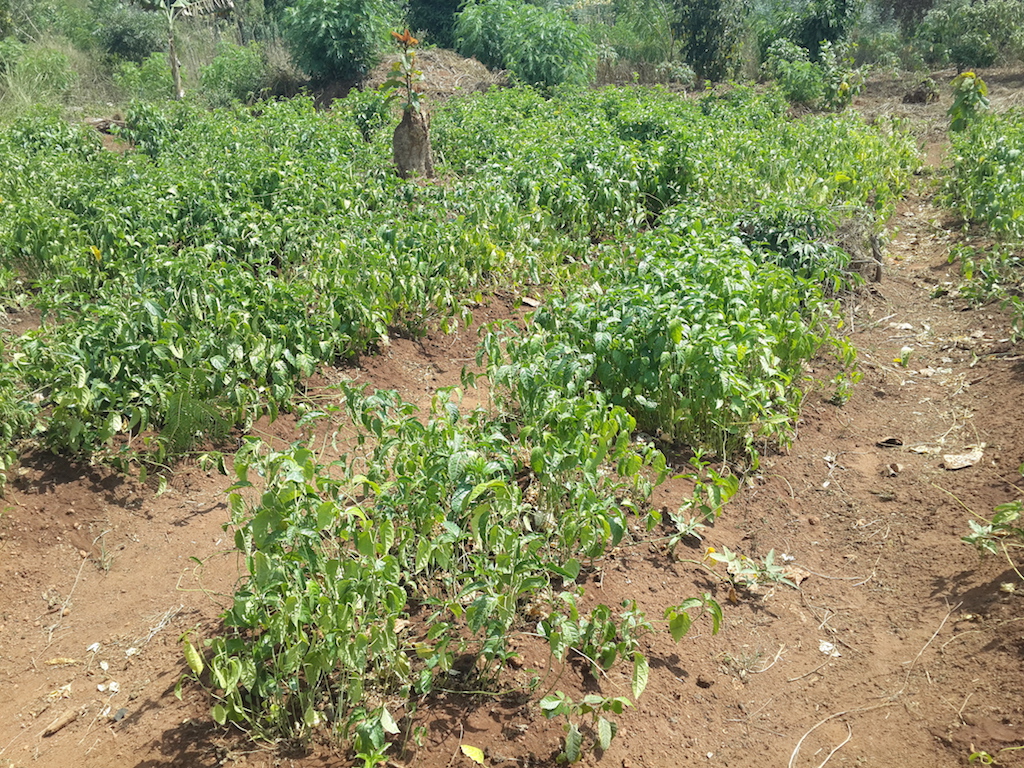
Passion Fruit Nursery

Passion Fruit Nursery

What followed was a visit to different parts of the farm. We started at the nursery with some unconventional wisdom:

  • A shade is not required as the seedlings are very resilient
  • There is no need to pot the plants as this increases the cost
  • The seedlings have to be transplanted with as little soil as possible to prevent transfer of diseases
  • The current seedlings had been in the nursery bed for 2 months, while waiting for the rains which are expected in the next 2-3 weeks, end of March.
Land prepared for passion fruits

Land prepared for passion fruits

From the nursery we moved to a new field that was being prepared for transplanting. Top tips:

  • Holes for vines are spaced 3m apart from each other
  • The holes are 2 feet wide and 1 foot deep. Planting seedlings much deeper that that leads to higher incidence of root rot
  • Manure is added to the holes and mixed with the soil to improve the soil texture and provide some additional nutrients.
  • In case additional artificial fertilizers such as NPK, are needed, they need to be placed in between the holes to enable the fertilizer to spread when it rains.
  • For starting with passion fruits, it is recommended that the initial size of the crop be limited to 2 acres.
  • In order to reduce the upfront costs of startup the poles can initially be placed about 10m apart as the initial support is only needed for the vines to grow to the trellis
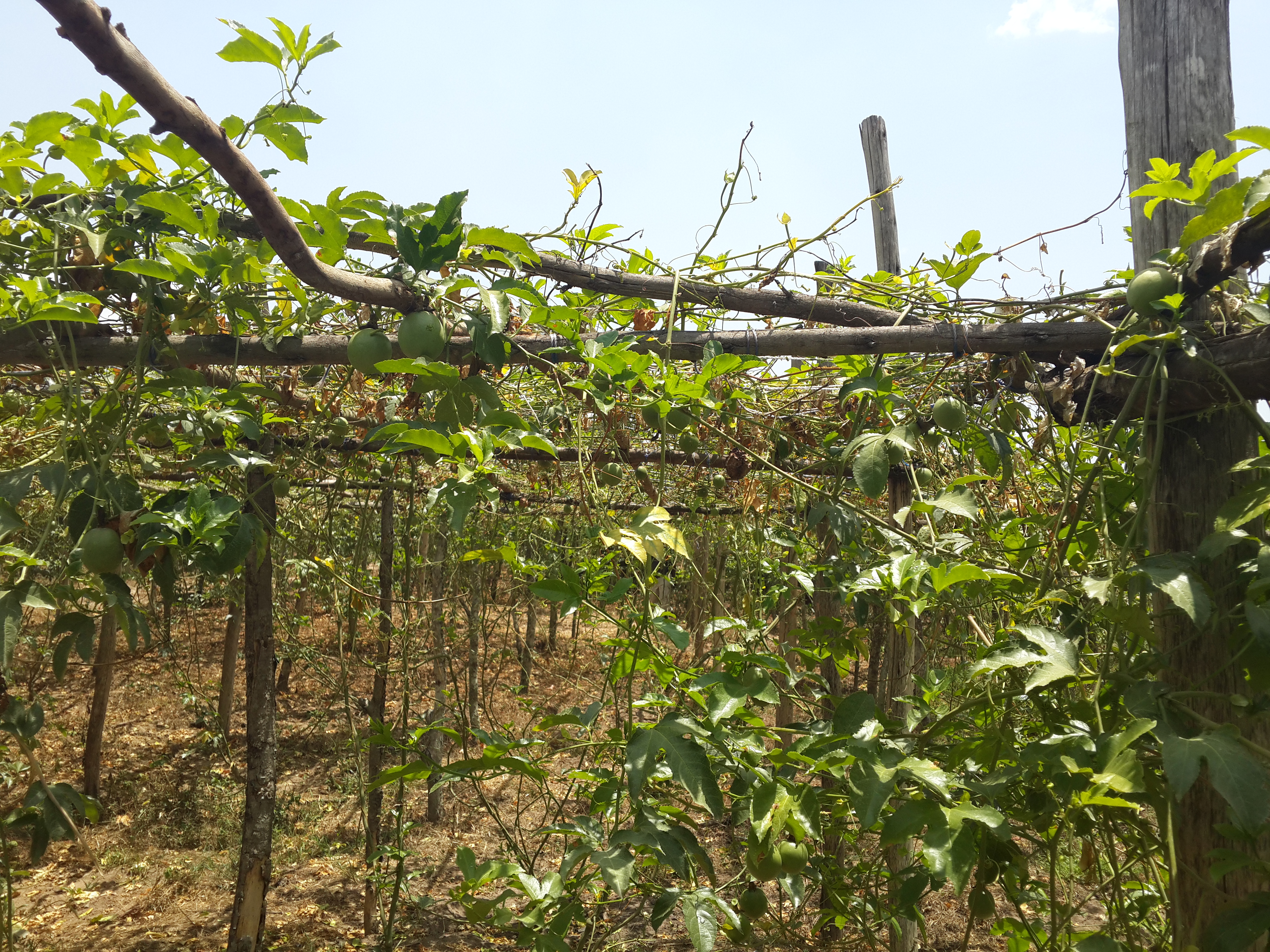
Table Type trellis

Table Type trellis

Too many branches on a vine

Too many branches on a vine

From the nursery & newly opened land, we next visited existing passion fruit vines:

  • Regular spraying is paramount with a cocktail of fungicide, pesticide and folio fertilizer. When spraying vines and foilage all have to be sprayed
  • Pruning of foliage is important to reduce overcrowding and ensure existing branches get enough sunlight and space
  • There were separate thoughts on number of vine branches to leave on each plan – with 1 (Denis) and 2 (JB). The risk with leaving one vine is that when its infected with blight and has to be removed (as there is no cure), there is no replacement while with more than one (2-3) then its possible to have continued production from that vine. The principle however is avoid overcrowding to increase productivity whatever choice you make
  • The fruiting branches need to be spaced at about a foot apart to have good productivity
  • Water is very important for the health of the vines and fruits, any shortages will result in lower production and poor quality.

Once we completed visiting the vines, we collected to discuss farming as a business with the following food for thought:

  • Take time to research, and understand the farming venture you are trying to get into. Read, talk to practitioners of the venture, wander around while leveraging the scientific knowledge available.
  • Do not try to do everything, it is important to make a decision on what to pursue.
  • Make a business case for the farming venture, also include the cost of land (asset) in your computations
  • Rightsize your business ventures to match available financing, knowledge, labor, and constraints
  • You do not have to own the structures for production, you can lease land, rent structures however ensure that you have factored it into your business case
  • Start small – which is relative to the size of the venture, but which matches your financing
  • Market is important – you need to build your market and distribution
  • Monitor your progress, keep records to enable you to track progress based on initial estimates
  • Leverage potential synergies with the farming venture along with colleagues, neighbors, your networks to improve the business case e.g., having bees along with passion fruits, maize and other flowering crops
  • Engage scientific expertise but leverage your own learnings and experiences to guide what you do
  • Keep records, keep records, keep records …

The afternoon was crowned by talks from:

  • UAP & Jubilee Insurance Uganda on livestock and crop insurance products, both of which depend on the farmer’s experience and records to back up valuation
  • The Hive Group talking about the benefits of having bees on a farm especially for passion fruits that cannot self pollinate
  • Engsol talking about a manual flexi pump for irrigation and other water needs on the farm
  • Farmers Network Uganda talking about their organization and benefits from joining their organization

Special thanks to Stephen Wasswa and Kakungulu Safaris for the comfortable transportation to and from the venue

Freshly picked passion fruit ready to eat
Freshly picked passion fruit ready to eat

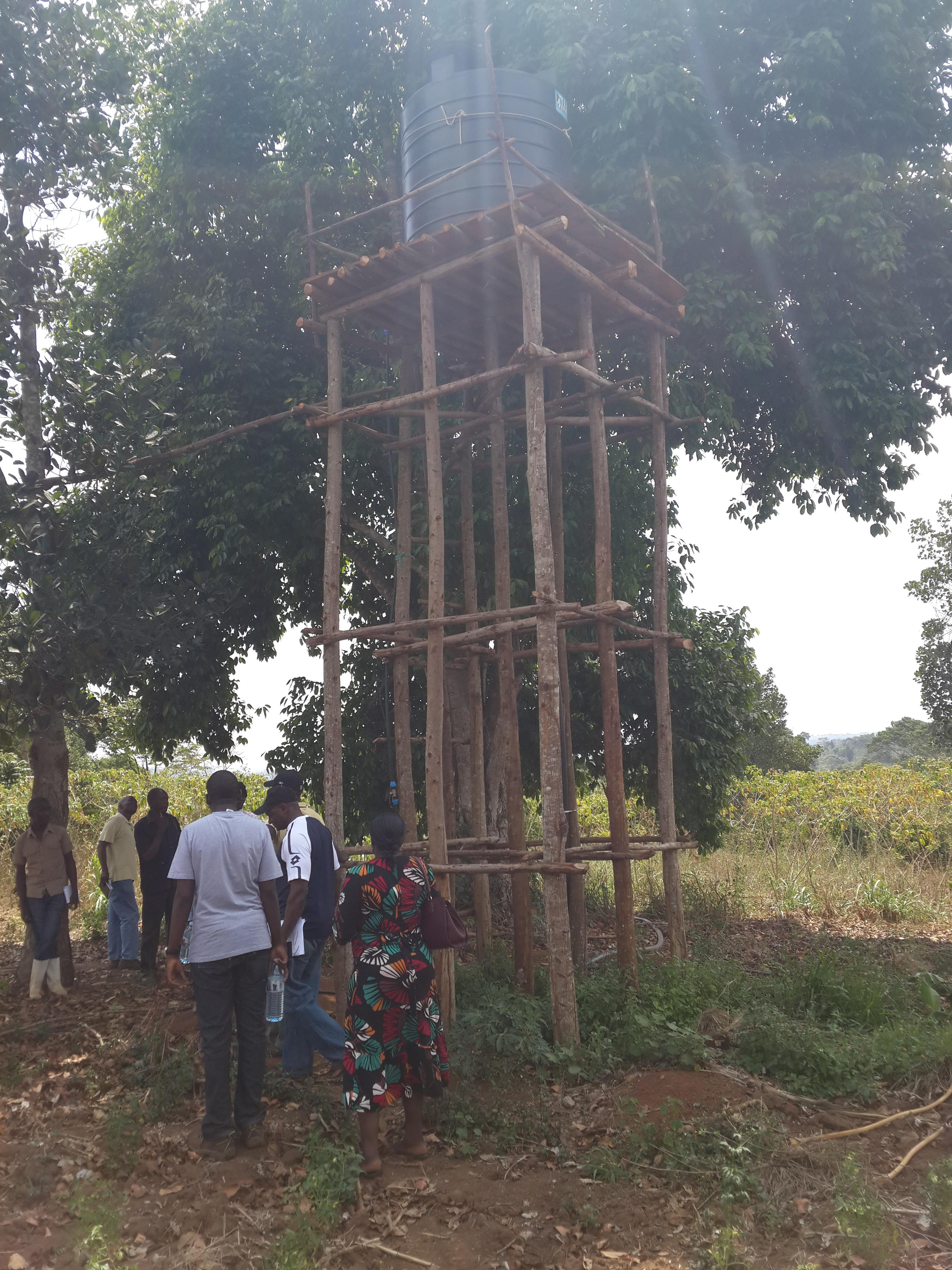
You do not need metal frames to hoist tanks

You do not need metal frames to hoist tanks

Line Trellis

Line Trellis

Table Trellis

Table Trellis

Share this:

  • Share on X (Opens in new window) X
  • Share on Facebook (Opens in new window) Facebook
Like Loading...
crops horticulture passion fruit 4 Comments

Mindset Shift Required Agriculture Success for 2015 & Beyond

February 26, 2015 by ssmusoke

So 2015 is the start of campaigns for the 2016 election year in Uganda, and President Museveni is preaching the gospel for the electorate on how they will grow and prosper in the times to come. One of the messages is Value addition in agriculture being key to Uganda’s growth along with commercial agriculture, which is being picked up and replicated by members of parliament.

However this is a flawed assumption, because it assumes that value addition is a fix for low agricultural productivity and revenues for small holder farmers. For anybody involved in any kind of value addition for agricultural products, the problem is that:

  1. The supply of the products is seasonal, low quality and inconsistent.
  2. The trade in products is largely comprised by “middlemen” who buy from the farmers at the lowest prices and try to sell to the consumers at the highest prices
  3. The market for value added products has to compete with lower priced imported products, which coupled with #1 does not make value addition profitable.

So what next, how does the President, government and leaders focus their energies to get agriculture to where it needs to be:

  1. Reduce the amount of counterfeit agricultural inputs especially seeds, agro-chemicals and fertilizers
  2. Improve financing opportunities for medium-holder farmers, who like the middle class bridge the gap between the small holders and large commercial farmers and concerns. The Agricultural Credit Facility (ACF) is not readily available
  3. Support the growth of agricultural cooperative societies over SACCOs. The societies deal with bringing the farmers together to leverage economies of scale, and reducing the cost of production, as well as providing a support system via input aggregation, learning, marketing, post-harvest processing.
  4. Identify, and negotiate trade deals for agricultural produce with international markets, which can be fulfilled by co-operatives in #3 above leading to their sustainability
  5. Set quality standards for produce to ensure that the market standards in #4 above are met
  6. Provide incentives for post-harvest processing and value addition. Why would contracts to supply produce to schools, army, police etc not be passed through the Uganda Cooperative Alliance – no handouts, just opportunity to make a difference.
  7. Revive and support crop and animal specific associations

What are your thoughts?

Share this:

  • Share on X (Opens in new window) X
  • Share on Facebook (Opens in new window) Facebook
Like Loading...
crops livestock 1 Comment

February 2015 – New Chicks

February 12, 2015 by ssmusoke

Exciting times, as today we are adding another 1,200 birds to the farm. This brings the total capacity to 4,000 layers.

The new flock is Lohmann Brown which is a change from the Hyline breed for the previous two flocks. This will also be a flock where we intend to test a new type of feeder that needs to be filled once a day rather than the current 3 times a day for the wooden feeders.

Photos below

baby chicks packed 50 in a box

baby chicks packed 50 in a box

Chicks now in brooder

Chicks now in brooder

Chicks now in brooder 2

Chicks now in brooder 2

Share this:

  • Share on X (Opens in new window) X
  • Share on Facebook (Opens in new window) Facebook
Like Loading...
livestock Leave a comment

2015 – A Look Ahead

January 12, 2015 by ssmusoke

It has been a long time since the last update, however a lot has been going on in the background which is defining how the project is progressing. 

The highlights are: 

  1. Expansion – the ground work is being laid in 2015, however looking to at least triple the current flock numbers
  2. Experiments – New Breeds – we shall be looking to try out different breeds of birds to assess productivity potential 
  3. Experiments – Health Management Regime – taking all the learnings we will be reviewing our vaccination regime (for chicks) and health management for flocks during laying to extend the productive lifespan of the birds through proactive health management
  4. Experiments – Feed Automation – in our current facility which was not built for automation, the only change in the new flock will be feeders that are filled daily reducing the need for workers to keep entering the house
  5. Experiments – Water Supply Automation – in the new expanded facility the plan is to have full automated water supply a move which will reduce the costs of scaling 
  6. Experiments – Cage systems – this is for later in 2016, once the economics have been fully worked out, however this looks to provide the potential for increasing the density of the flocks within an area while reducing the labor intensive activities. 

All in all 2015 is looking exciting with new prospects and opportunities abound

Share this:

  • Share on X (Opens in new window) X
  • Share on Facebook (Opens in new window) Facebook
Like Loading...
livestock poultry Leave a comment

Water Storage Unit – 10,000liters

July 11, 2014 by ssmusoke

As the tank is being put together before being installed 

image

After installation of the tank, now ready to use 

image

Share this:

  • Share on X (Opens in new window) X
  • Share on Facebook (Opens in new window) Facebook
Like Loading...
livestock poultry water Leave a comment

The first egg is dropped – June 21, 2014

June 23, 2014 by ssmusoke

So happy that my new flock has started dropping eggs. They were born on Feb 3, 2014 and started laying on June 21, 2014, after a period of 138 days or 19 weeks (rounded down) or 4 months and 19 days

Share this:

  • Share on X (Opens in new window) X
  • Share on Facebook (Opens in new window) Facebook
Like Loading...
livestock poultry Leave a comment

Farm Record Management

June 8, 2014 by ssmusoke

Currently the model I am using is as follows (all pen and paper)

1. Expenses Book – here I track all expense on the farm whether operational or capital expenditure.

2. Sales book – sales of eggs to clients which is balanced every Sunday to track Profit and Loss todate

3. Farm journal – for each flock track the water usage, feed given, medication given and any other occurences on the farm. Also for laying birds how many eggs are picked at each point in time. This enables the tracking of laying trends

4. Daily Production Log: total of eggs laid for each flock for each day

The plan is to move this records into Quick books to build a proper P&L but for now this works for us

What do you use, and what works for you? 

Share this:

  • Share on X (Opens in new window) X
  • Share on Facebook (Opens in new window) Facebook
Like Loading...
livestock poultry accountingfarm recordsrecords management 1 Comment

Laying Boxes

May 3, 2014 by ssmusoke

This time around we have taken an early approach and invested in building laying boxes, experience is the best teacher right?

Why laying boxes? What have we learnt? In the first flock, we were unable to get the laying boxes built in time which meant:

  • Alot of the laying was done in corners and odd places that the chickens felt comfortable. So we had to continuously monitor and improve the quality of these adhoc laying spaces (corners) to reduce damage to eggs
  • Higher operational costs as eggs have to be collected more frequently, 5 times a day to reduce damage
  • Aggressive monitoring for cannibalism and egg eating 

What do the laying boxes look like this time? The design has the following elements:

  • Raised 1 foot (30cm) off the ground
  • Each unit is 10’ (3m) long so that they can be moved around as needed
  • 10 laying rooms each 1’ (30 cm) 
  • Tapering top so that no laying is done at the top, and also to reduce crowding in the rooms
  • At the front and back, there is a 4” (10cm) board to stop the eggs from rolling out of the box to the ground. In one of the houses with a skirting, there will be no back support since the laying box is flush with the wall.
  • Instead of using expensive wood pieces at the back, these have been replaced by hard brown paper.

The proceeding photos show the stages of design for the laying boxes

image

image

Share this:

  • Share on X (Opens in new window) X
  • Share on Facebook (Opens in new window) Facebook
Like Loading...
livestock poultry laying boxes Leave a comment

8 weeks in Brooder

April 2, 2014 by ssmusoke

8 Weeks in a Brooder … now time to separate them into their new houses

Share this:

  • Share on X (Opens in new window) X
  • Share on Facebook (Opens in new window) Facebook
Like Loading...
livestock poultry Leave a comment

5 weeks in Brooder

March 14, 2014 by ssmusoke

The chicks are now 5 weeks, the feathers have also grown reducing the need for pots (now 4 previously 6), and the two brooder areas have been combined into one

Share this:

  • Share on X (Opens in new window) X
  • Share on Facebook (Opens in new window) Facebook
Like Loading...
livestock poultry brooder Leave a comment

Post navigation

← Older posts
Newer posts →

Get In Touch With Us

P. O. Box 8563 Kampala, Uganda
Email: kungufarm at gmail dot com

Recent Posts

  • PoulTech – Digital Poultry Farm Management Tools
  • Disinfection and preparation of a poultry house before receiving new flocks
  • Building a Chicken House – Experience
  • 2024 – The year Local Chicken comes mainstream
  • How do I safely add local chicken from un-trusted sources to my home farm flock

Enter your email address to follow this blog and receive notifications of new posts by email.

Join 54 other subscribers
Create a free website or blog at WordPress.com.
A Ugandan Farmer
Blog at WordPress.com.
Privacy & Cookies: This site uses cookies. By continuing to use this website, you agree to their use.
To find out more, including how to control cookies, see here: Cookie Policy
  • Subscribe Subscribed
    • A Ugandan Farmer
    • Join 54 other subscribers
    • Already have a WordPress.com account? Log in now.
    • A Ugandan Farmer
    • Subscribe Subscribed
    • Sign up
    • Log in
    • Report this content
    • View site in Reader
    • Manage subscriptions
    • Collapse this bar
 

Loading Comments...
 

You must be logged in to post a comment.

    %d